Planning for a Fossil-Free Future
In recognition of the urgency of the climate crisis, the University of California strengthened its Sustainable Practices Policy in 2023 to prioritize direct emissions reductions, limit reliance on carbon offsets, and align with State climate goals. As part of this systemwide effort, UCSF conducted a State-funded Decarbonization Study in 2024 to evaluate the feasibility of reducing on-site Scope 1, 2, and 3 emissions by 90% or more.
Key Terms & Definitions
Decarbonization is the reduction of carbon emissions from our buildings, operations, and travel.
Carbon emissions are the gases—primarily carbon dioxide—released into the air when we burn "fossil fuels" like coal, oil, and gas to power our cars, heat our homes, and run factories.
Electrification refers to switching systems (like heating and cooling) from gas to clean electricity
Climate Action Plan is a strategic "playbook" that outlines specific, measurable steps a community or organization will take to slash its carbon footprint
Why It Matters: Healthier communities, cleaner air, and a safer climate.
Decarbonization Study:
UC San Francisco developed a building energy decarbonization roadmap that outlines potential strategies across all major sites. The study assessed technical and financial pathways to decarbonize UCSF’s building energy systems, including new electrified heating and cooling plants, thermal energy storage, and distribution systems for hot and chilled water. It also proposed individual electrified systems for stand-alone buildings.
In addition to engineering solutions, the study considered equity and climate justice, and explored opportunities for education and research. While not an adopted or approved plan, the roadmap supports UCSF’s long-term commitment to climate action and health equity, and informs future decision-making. If pursued, the strategies outlined could reduce UCSF’s combined Scope 1 and 2 emissions.
These are the five key deliverables identified in the Decarbonization study:
- Deliverable 1 – Strategy: Roadmap to cut Scope 1 fossil gas emissions by 90%+ by 2045 (with interim 2030, 2035, 2040 targets), using scenarios like electrification, biogas, or hydrogen.
- Deliverable 2 – Cost Analysis: High-level estimates of capital/operational costs, savings, and avoided costs to support funding and financial planning.
- Deliverable 3 – Equity: Assess equity and justice impacts of decarbonization on labor and communities, using procedural, recognition, distributive, and restorative justice lenses.
- Deliverable 4 – Gaps: Identify knowledge gaps and needed studies for climate action planning (scope 1–3, resilience, risks, justice, finance, etc.).
- Deliverable 5 – Implementation: Phased project list and strategies for achieving deep emissions reductions, aligned with other capital priorities.
Read our Decarbonization Study
Scopes 1, 2, and 3
| Scope | What it includes | Our Actions |
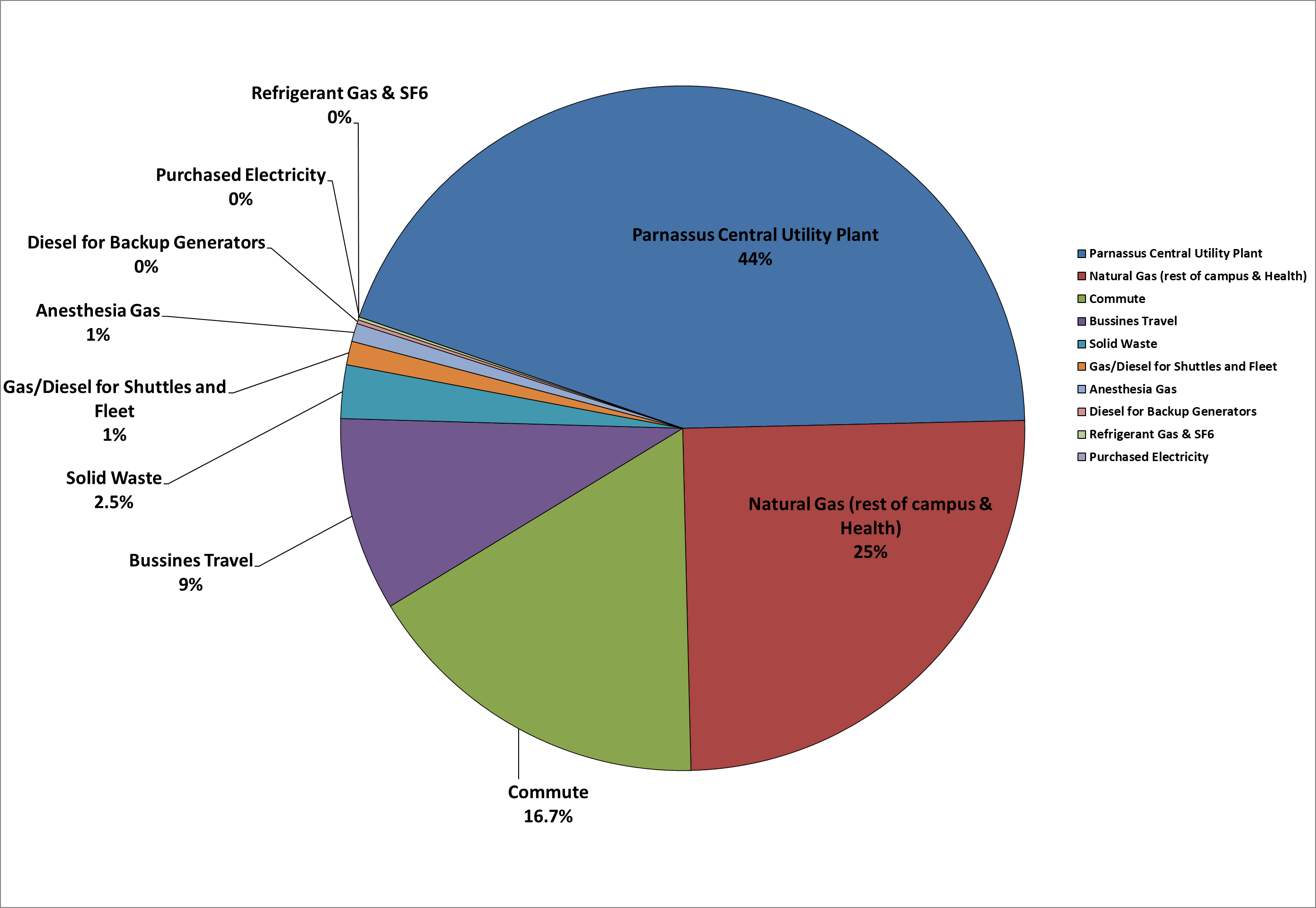
| 1 | Direct emissions like natural gas, fleet fuel, refrigerants, anesthesia gases, Backup generators, Cogen plant | Transitioning to low-emission anesthesia gases, refrigerants, EVs |
| 2 | Indirect emissions from purchased electricity: SFPUC, PGE, UCOP Clean Power | 98% of electricity from clean sources |
| 3 | Indirect emissions from the supply chain like commuting, business travel, procurement, and municipal solid waste | Promote sustainable commuting & reduce air travel |
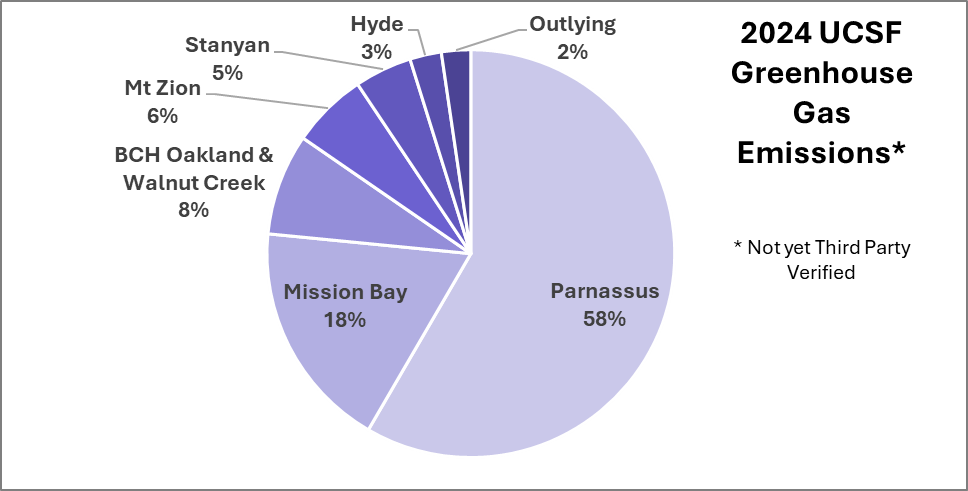
UCSF CY24 Greenhouse Gas Emissions (CO2e)
Climate Action Plan
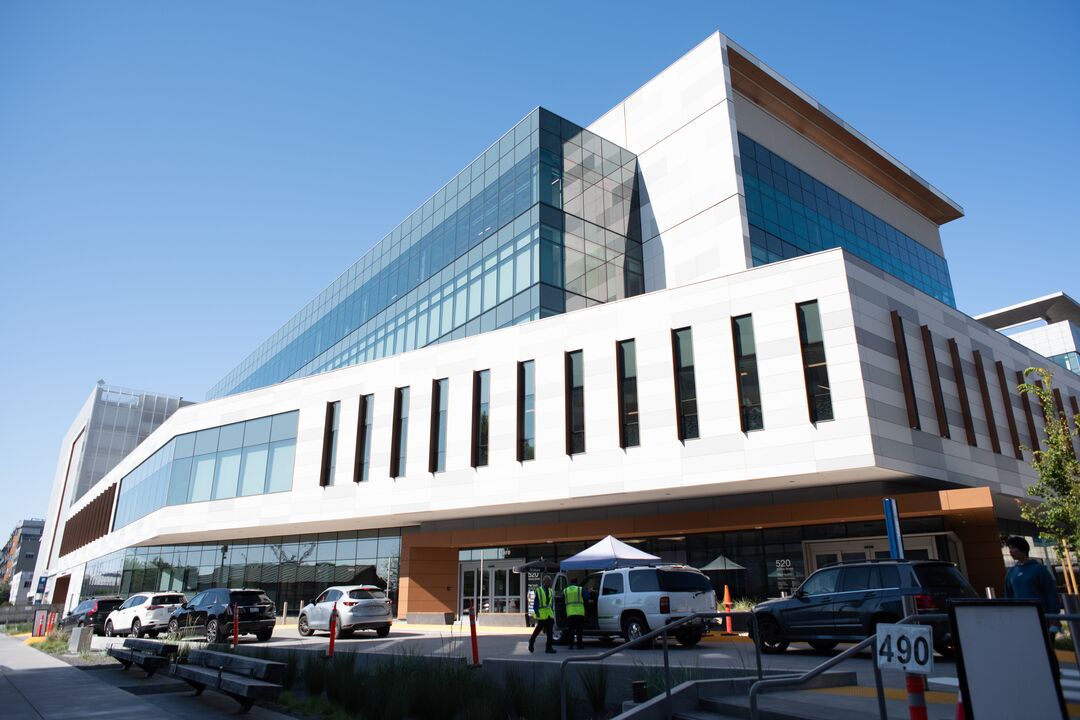
UCSF is developing a comprehensive Climate Action Plan (CAP) to meet the University of California’s Sustainable Practices Policy commitment to reduce total greenhouse gas (GHG) emissions by 90% by 2045 from a 2019 baseline. The CAP serves as UCSF’s strategic roadmap to address emissions across Scope 1 (direct emissions), Scope 2 (purchased electricity), and Scope 3 (indirect emissions such as commuting, travel, procurement, and waste) while strengthening climate resilience and advancing health equity.
Building on the 2024 Decarbonization Study, the CAP expands beyond building energy systems to integrate transportation, supply chain, waste, clinical operations, and enterprise-wide planning. The plan will outline measurable interim targets for 2030, 2035, and 2040; identify funding scenarios; embed decarbonization requirements into capital planning and CEQA processes; and align campus and health facilities with long-term emissions reduction goals under UC policy.
Our Progress
Investing in Clean Energy
- 98% of the electricity that we purchase on campus comes from clean resources: San Francisco Public Utilities Commission (SFPUC), PGE, and UCOP Clean Power.
Reducing Emissions
Energy Efficiency
We've collaborated with the Energy and Utilities team to increase energy efficiency:
- Layer Up for Science - modifying temperature ranges to increase energy savings
- Peak Load Shaving at Mission Bay - reducing our energy consumption during peak hours
- Extreme Heat Event Demand Response - implementing strategic cooling on hotter days
- Holiday Schedule Changes - decrease HVAC load during holidays to maximize energy savings
- Replacing fluorescent lightbulbs at Parnassus Heights with more efficient LED lighting retrofits to save electricity
New Electric Buildings or Projects
UCSF has launched 8 All-Electric Projects:
Our Partners
Equity, Justice & Community Health
UCSF is committed to a just transition. As an anchor institution, UCSF is integrating climate equity into decarbonization planning by:
- Supporting workforce development & retraining for engineers and facilities staff
- Engaging frontline communities and prioritizing inclusive climate action
- Learn how UCSF expands economic security and career pathways for our local communities by exploring the Office of Opportunity and Outreach.
- Collaborating with Ramaytush Ohlone and embedding justice principles in planning.
- Explore how UCSF strengthens our communities through the Anchor Institution Mission, driving equity and sustainability across the region.
What You Can Do
♻️ Green Streak Challenge
Get your team on a winning streak!
Got an idea, question, or comment? We'd love to hear it!
Contact sustainability@ucsf.edu
