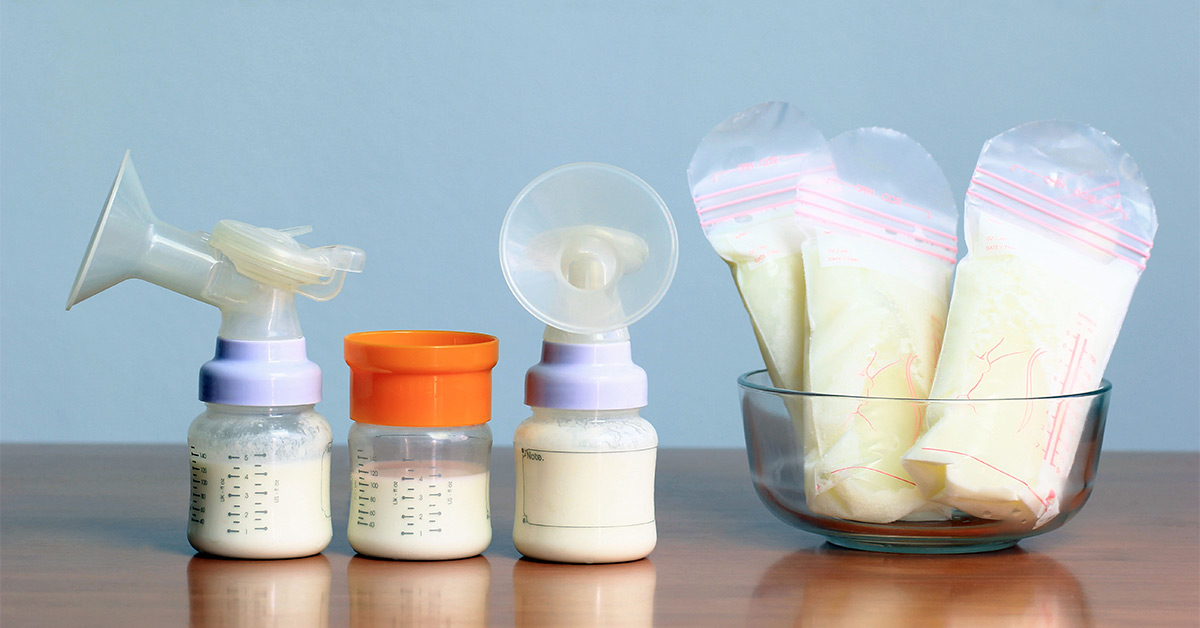
Following these steps will keep your milk safe and the lactation rooms clean.
To ensure safe milk handling in lactation rooms without sinks, we recommend that you wash your hands before entering the room, utilize the provided hand sanitizer, and wear provided gloves while using disinfectant wipes to sanitize furniture and other hard surfaces. Do not use disinfectant wipes or hand soap to clean your pump parts.
Storing Milk at Work
- Human milk can be stored in an insulated cooler bag with frozen packs for up to 24 hours. Once you return home or to your destination, use the milk right away, store it in the refrigerator, or freeze it (CDC, 2023).
- Store your insulated cooler bag in a location that you feel comfortable with, such as a break room, private office, lockers, etc.
- Ask your supervisor where the nearest refrigerator is to your primary work location.
- Please keep in mind that if you store your milk in a lactation room used by others, you may need to wait to retrieve your milk if the room is occupied.
Follow CDC Proper Storage and Preparation of Breast Milk
Pick-up a free insulated cooler bag
Cleaning Pump Parts at Work
- Cleaning your pumps part in between pump sessions is the safest option for your baby.
- Take apart pump parts, rinse with water, wash with soap (do not use hand soap), rinse, and dry with a clean cloth or leave to air-dry on a clean tea towel or rack.
- Use a dedicated brush/sponge when cleaning pump parts and infant feeding items.
Other tips:
- Separate clean from dirty pump parts by using two food-safe bags.
- Clean accessories with pump part wipes, e.g., Dapple and Medela.
Follow CDC How to Keep you breast Pump Clean
Follow recommended handling and storage techniques to maintain the safety and quality of expressed milk for your baby’s health.