Projects are listed in no specific order.
Mother: Healing our sacred environment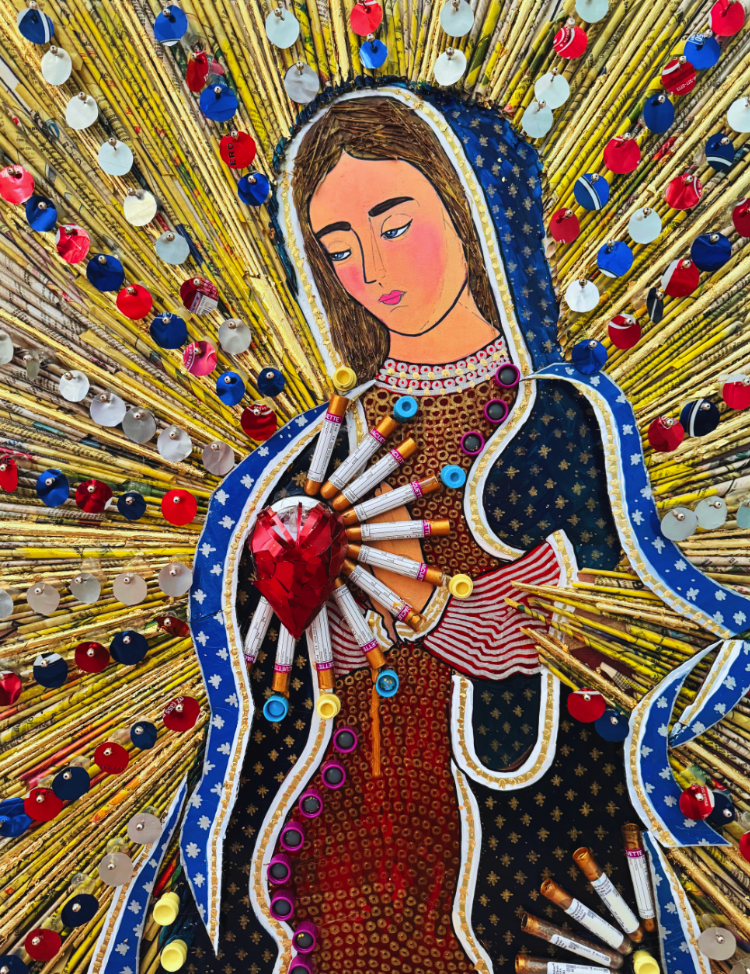
Title "Mother" As a reference to "Mother Nature," my goal is to showcase the use of recyclable materials in creating art pieces of deities. This serves as a reminder of the sacred aspect of our nature and environment, and how crucial it is to take care of our surroundings. I aim to promote education about the connection between healthcare waste and the environment, and the message I intend to convey is that our environment and health are sacred. Just as we respect our Gods and beliefs, we should respect our planet, our environment, and Mother Nature. Healthcare, like our environment, embodies life and needs to be protected. Our role in medical systems is caring for our environment and our life, “Life is sacred. Life is art. Life is a sacred art.”
The painting was created using a combination of recyclable materials. The recyclable paper was used for the background, while aluminum soda cans in red, silver, and blue were used with recyclable push pins as a representation of stars of light emanating from the heart. Expired laboratory blood sample tubes were painted gold to represent rays of light, connecting with the essence of coming from the heart where our blood circulates and keeps our energy and life moving. Recyclable cardboard boxes were used for the blue tunic and decorative elements were made using laboratory caps and plastic caps. Recycled rice hay was used for the hair. All the materials were collected at the Neurosciences Clinical Research Unit at the University of California, San Francisco, and the UCSF Memory and Aging Center Sandler Neurosciences Center. None of the materials used were biohazard or hazardous waste.
By Luis Martinez
 Lady of Justice
Lady Justice is a collaborative project submitted by the Department of Orthopedic Surgery at UCSF. She has been a labor of love and reflection, created from the ashes of trash from the Orthopaedic Institute, Parnassus, Mount Zion, and Mission Bay. Standing 5ft tall, her bodice is comprised of countless layers of drapes, paper, and plastics overlaying a recycled Halloween skeleton, perfectly fit for her orthopedic makers. Blinded, confident, and unwavering - she towers with her sword and scale, weighing the injustice to our planet for the justice of our patients, pictured and consented on his hospital journey to recovery.
The scale of trash after a case in the operating room is overwhelming. We knew we wanted to capture as much material as possible while also making a powerful statement. Who better to represent our values and vision than Lady Justice herself?
Her final plaque, written in “indelible ink” reads: “Lady Justice has been portrayed by artists in many ways - sometimes with a sword, sometimes alongside animals, sometimes made of trash for a Waste to Art project at UCSF. Regardless of her portrayal, her meaning remains the same - an unbiased, blinded quest for what is just, fiercely guarding her virtues and protecting the truth. As doctors we have vowed to “Do No Harm.” But, what happens when avoiding harm in one arena, causes it in another? Where does the balance lie?
We would love to hear your thoughts on this balance. Please visit the back of our submission and join in our collective reflection. With admiration of our patients and our planet
By Dr. Rosanna Wustrack, Dr. Alicia Asturias, UCSF Department of Orthopedic Surgery
Naturplastics
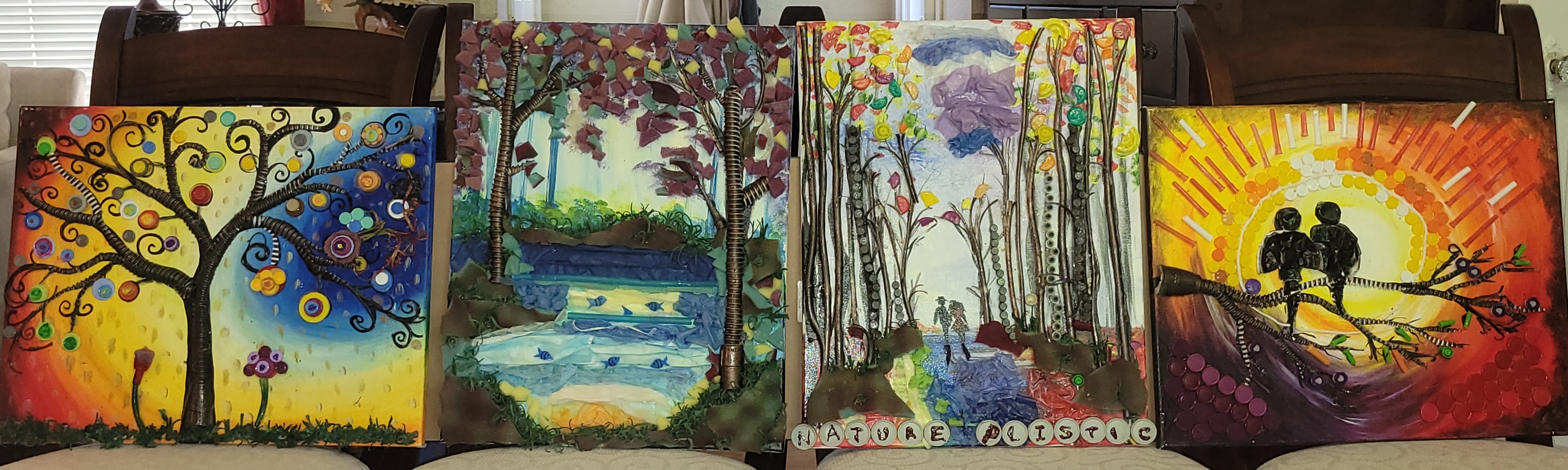
Hello everyone, I work as a Nurse at UCSF Parnassus Campus in the PACU. Every day at the patient’s bedside, many plastic and other materials, for example, medication vial caps, IV tubing, and positioning foam, are routinely disposed of as WASTE.
In this year's “Waste to Art Project”, I will show you how such waste can be used to create art. My Theme here, focuses on different scenes in nature. It is Nature that is most profoundly impacted by the indiscriminate dumping of this trash into landfills.
1) The 1st picture represents a large tree surrounded by wild grass. The tree itself is made up of CPAP Tubing that I have painted brown. The various fruits are made up of medication vial caps. The wild grass is made from short sections of elastic bands from the simple face masks on the patients coming out from the OR.
2) The 2nd picture represents a pond with fish in it, surrounded by trees. The Tree trunks are made up of CPAP tubing again. The foliage is made up of OR head foam pillows and patient positioning foam. The fish and the shark fin… are made up of an ambu-bag we use to ventilate patients with. The waters are made from a variety of face mask material and our OR head covers.
3) The 3rd picture represents a couple walking down a forest path in the fall. Here the trees are made of 2 different materials; the smooth trunks are made of suction tubing; the other trunks are made of Dilaudid caps and plunger tips.
4) The 4th picture represents a pair of love birds perched on a tree branch watching the sunrise. The branch is made of CPAP tubing. The rise of the sun is made of a collection of needle covers. The birds themselves are made of paper medication cups that I have painted black.
I call the 4 pieces together “NaturePlistic” This is a play on nature, plastic and synthetics. I have truly enjoyed creating these pieces of art and if you do to… then PLEASE VOTE FOR ME!
By Patti Malladi
 Green Cuisine: A Nutritious Diet for the Planet
For the 2024 Waste to Art competition, the UCSF Health Sustainability department created a plate depicting sustainable food tips. Dining services play a large role on the environmental impact of healthcare facilities, especially when it comes to greenhouse gas emissions and waste. The piece is an homage to the Nutrition and Food Services department, who graciously shares their office space with the Sustainability team. The plate is divided into four sections, depicting eating locally sourced foods, eating more plant-based foods, eating seasonally, and serving yourself smaller portions to prevent food waste. Wasted foodware items were used to create the piece, and to highlight the waste associated with food service. Items include disposable coffee cups, condiment cups, food trays, napkins, plates, snack wrappers, soup containers, utensils, and water cups. The waste was hot glued and painted on an old menu poster from the cafe to create our art piece.
By Mikayla White and Isabel Navarrete, UCSF Health Sustainability Department
Residui Chirurgico-Biomedici
 This scientific art piece — titled “Residui Chirurgico-Biomedici” (Latin for “Surgico Biomedical Waste”), and intermixing 3-dimensional (3D) printing with non-hazardous clinical waste — portrays discarded surgical instruments (i.e., curved Kelly forceps, a scalpel, and a Mayo Hegar needle holder) striking headfirst, next to the snout of a great white shark, as it devours an ovoid, misshapen clump of purple latex plastic with indeterminate margins. Nearby, the sleek remnants of a severed, charcoal-colored stethoscope, abandoned multicolored syringes, and mask straps (mimicking tufts of grass) enhance the environmental scene. Furthermore, the four-sided, rectilinear base on which the shark is resting is markedly textured, representing seafloor desiccation, and is covered with green paint, symbolizing phytoplankton (i.e., chlorophyll-containing microbes) from the nearby, adversely altered aquatic environment.
The genesis of this model started with some simple household items: a toy shark from my child, in conjunction with surgical tools and the suturing pad from my suturing kit, procured with guidance from mentors Dr. Brian Lin, MD, and Dr. Susannah Rose, MD, PhD. I captured these elements’ corresponding 3D data using LiDAR technology, relying on laser light to measure inter-object distances by calculating the time taken for reflected light to travel, and subsequently constructed a tangible model, simulating the shape and appearance of the aforementioned objects, rendering them in digital form. After refining the resulting 3D model in Blender, a free and professional-grade graphics software program, I collaborated with Makers Lab designers, Scott Drapeau, MA, and Jenny Tai, BS, to print the sculpture, incorporating further refinements and structural enhancements. Post-printing, I applied multiple acrylic paints (e.g., silver, gray, and green), primer, and adhesives to the model for its finishing touches.
At its core, this piece serves as a stark, artistic, and research-anchored commentary on the environmental repercussions of surgical waste — accentuating, as an example, resource consumption by dermatology clinics. Beyond dermatology and surgery, the environmental harms of biomedical waste encompass a pervasive challenge across all healthcare sectors.
By Woodger Faugas
 Recycle and Reuse for a Healthy Planet
This is our environmental message for impacting future generations. In becoming more aware of our usage patterns in the hospital, we can be inspired to find better ways to use materials. Everything is reused in our 3d-rolling piece, except for the new glue holding it together. Since we have a lot of Warriors fans, we included Steph Curry #30 to wish everyone “ Night-Night” and to “Sleep Tight” because that's what we do here in Anesthesia.
By Dept of Anesthesia and RCS at ZSFGH
 Harmony
Used materials: papers, plastic spoons, cardboards, Fruit seeds, sponges.
Just a reminder: Even though we do love our home “the planet earth”, and we are supposed to be part of the harmony present. But, we are perturbing the balance: deforestation to make our homes, producing harmful gases, and wastes.
By Ahmed Amine Mergani
 Patchwork Heart
This is a representation of a Modified Norwood procedure for Hypoplatic Left Heart Syndrome. It is made by using discarded materials from cardiac cases from either: case cancellations, routine discards, expired materials, or contaminated (no longer sterile but clean) supplies. It represent how I felt the first time I saw this procedure in thinking it was just a patchwork to make the heart function. It uses various material to work with inadequate physiology to help sustain life for future interventions. In the spirit of recycling, the blue material as canvas is a wrap normally used to cover sterile instrument trays and I found a used canvas at a Goodwill that I covered with it as the backdrop. I even kept the note my coworkers made to remind them to save any supplies or trash that was “colorful” for me. I used a glue gun to apply the pieces together. It shows the Neoaorta, Sano shunt, and includes an intracardiac catheter into the right atrium.
By Reia Zimmer
Woven
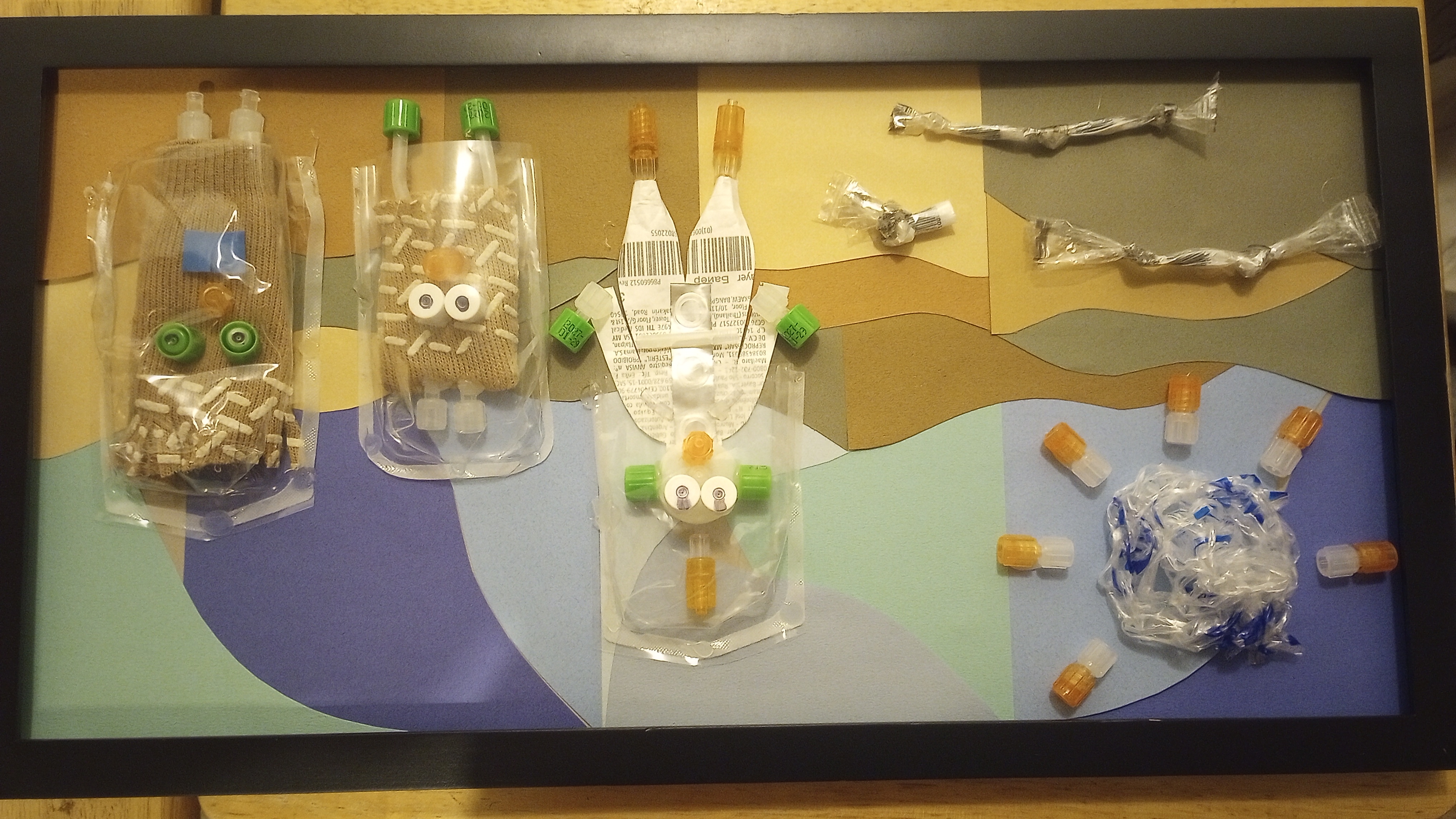
Materials: Saline wrappers, personal bags (crocheted plarn), contrast accessory packaging, tubing.
Woven is a whimsical piece featuring figures on a planet who have adapted to incorporate the plastics in their environment. They traverse the landscape in individual pods, soaking in the beams of a plastic sun.
The figures look out with curiosity through a warp in the universe to see a world where plastics have yet to integrate with the bodies of its inhabitants--the Earth.
"Peace is not the absence of conflict, but rather, the presence of trust." - Unknown
By Erika Padilla-Morales, Sr. Fusion Nuclear Medicine Technologist
 Pride in Accountability
This 2 ft. x 3 ft. work of art was created from over 1,200 individually trimmed and hand-placed reclaimed colored stickers used to label syringes of drugs given to patients by anesthesia providers. For example, propofol, a common sedative agent, is yellow; rocuronium, a muscle relaxing agent, is red (a very special thanks to the Moffitt Anesthesia Techs for collecting the labels).
In 2021, an Intersex-Inclusive adaptation of the 2018 Progress Pride flag was created that celebrates not only the rich diversity of the LGBTQIA+ community but also the myriad value added for all when differences mattering is truly the minimum. This piece was created with love as a tribute to the Community and the continued progression of Diversity, Equity, Inclusion and Antiracism efforts at UCSF.
As in art and life, some things are learned only by doing, and that is the challenging work I hope to inspire with this piece: continue to move forward in sustainability and DEIA efforts with courage and vigor, because while you and circumstances are not perfect and you will make mistakes, in doing the work you will become a better version of yourself and that itself makes the world a better place. Thank you.
By Charlene M. Blake, MD, PhD
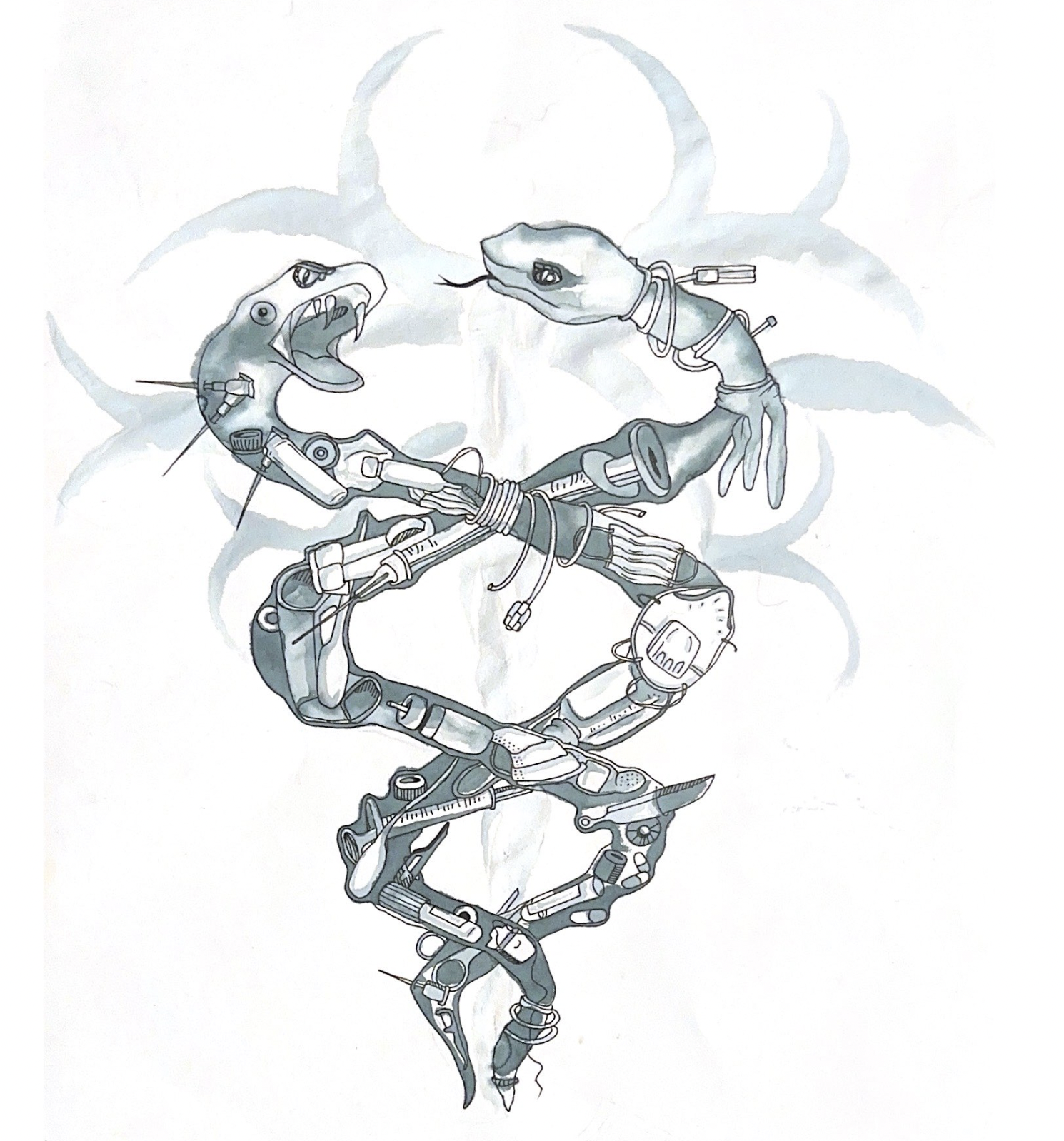
Staff of Hermes
By Anita Virmani
California the Beautiful
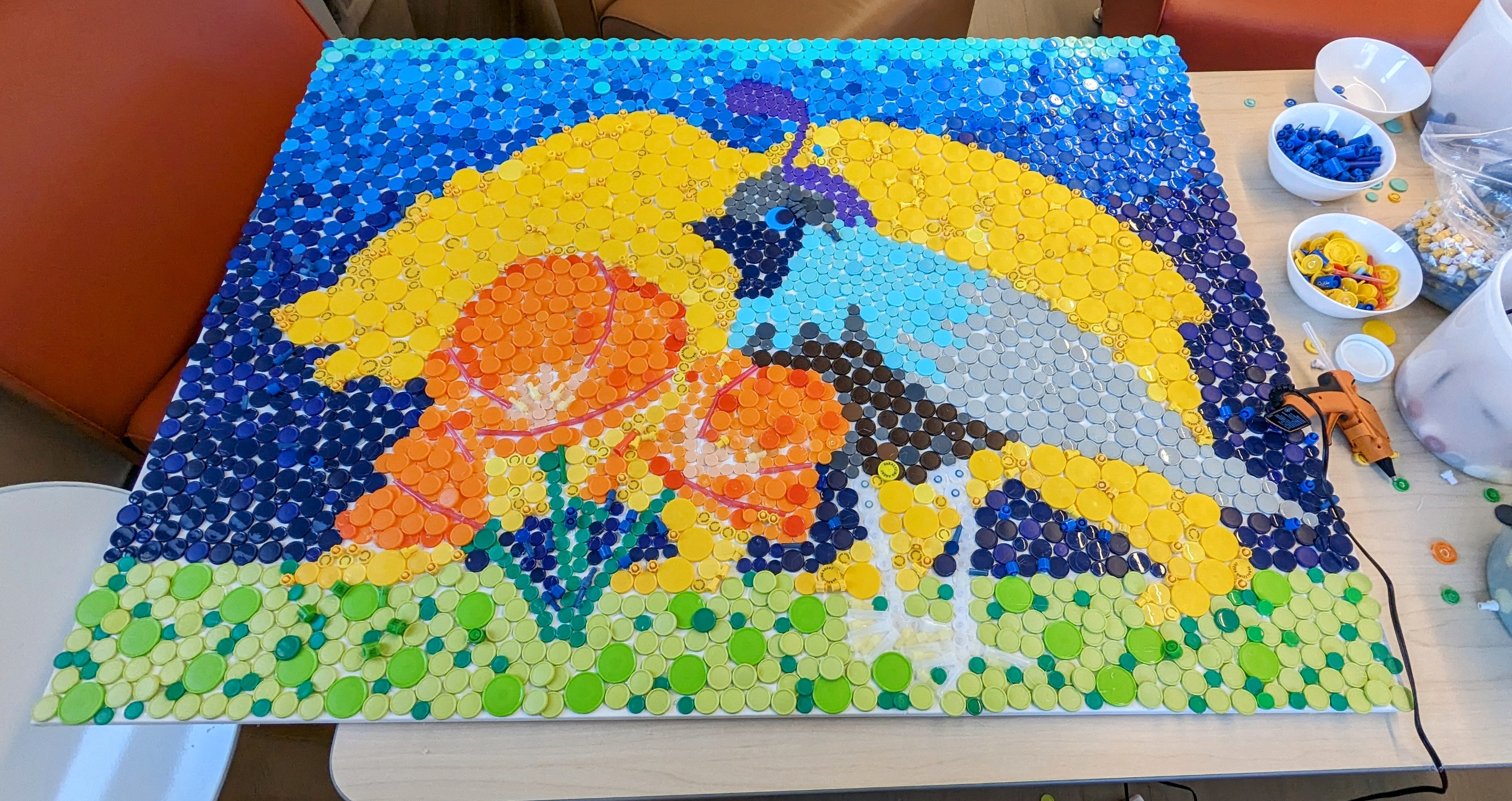
As a critical part of surgery, administering anesthesia produces a lot of waste. The waste comes in all shapes and forms, used syringes, IV bags, tubing, and the most special of them all, the colorful medication vial caps.
It has been the third year and almost a tradition for the Anesthesia Department to make an art piece from these colorful vial caps. This wonderful tradition has been warmly supported by the whole department by collecting vial caps and contributing to creating this vibrant and whimsical canvas. This year, we pay tribute to our beautiful State of California. The art piece highlights the three symbols of the biodiverse state, the state animal the golden (grizzly) bear, the state flower California Poppy, and the State bird California Quail. The mosaic blue sky fades into the dark blue of the ocean and the grass flattened under the wind in beautiful shimmering waves of green contract with the iconic bear, the playful quail, and the idyllic poppies. We hope that this art piece will raise awareness of the waste issue in healthcare so that we can continue to preserve and protect our beautiful and biodiverse state.
By Hemra Cil, Elizabeth Whitlock, Kaiyi Wang, Seema Gandhi
Unnamed
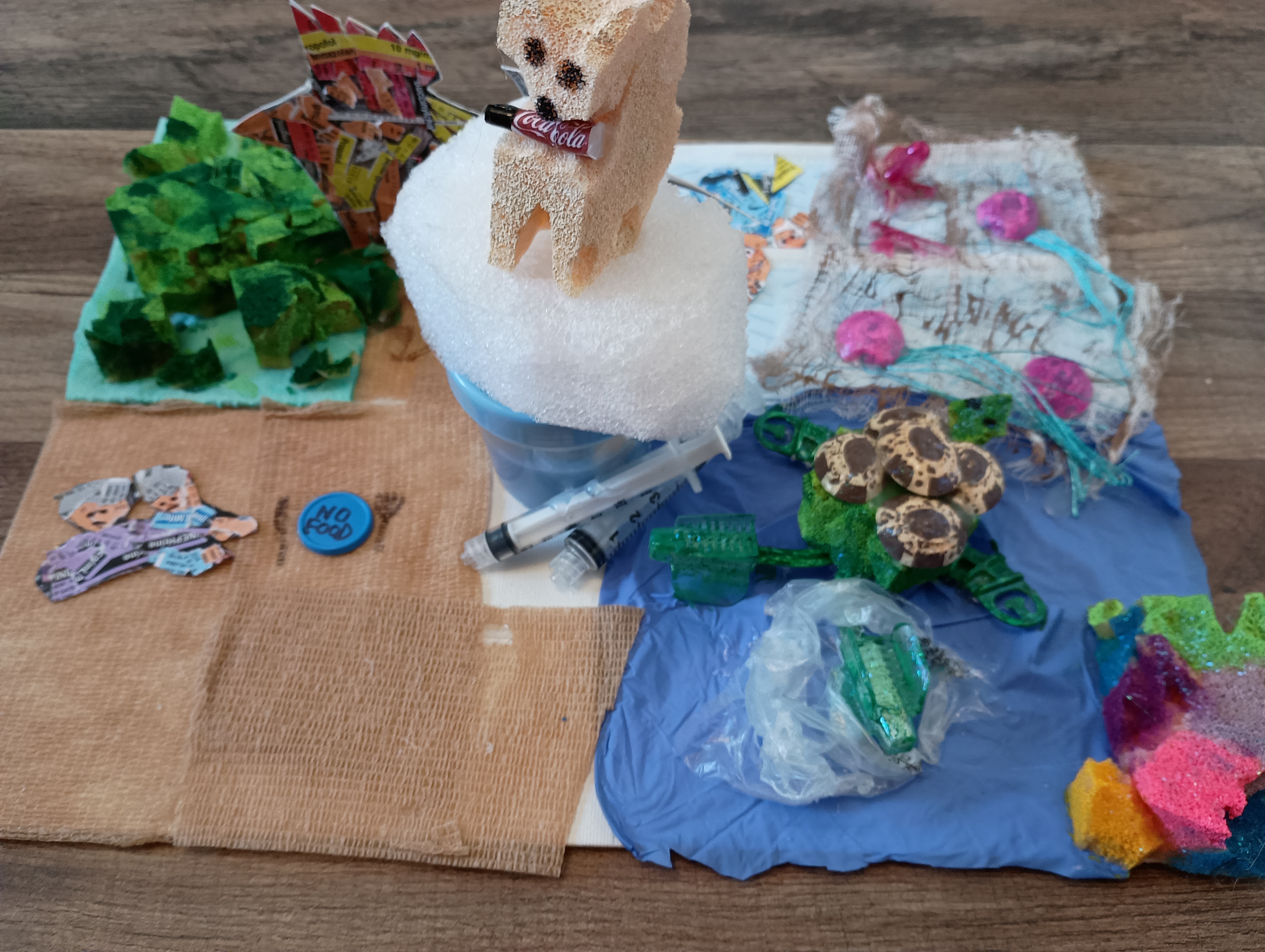
The inspiration and materials I used was from the operating room such as surgical gloves, medical masks, sponges, anesthesia medical supplies and various other items found in the OR and all supporting departments that assists in making that aspect of emergency operations successful. My inspiration came from the pollution that contributes to the current "Global Climate Change" catastrophes.
By Tatiana Domingo
Re-Gown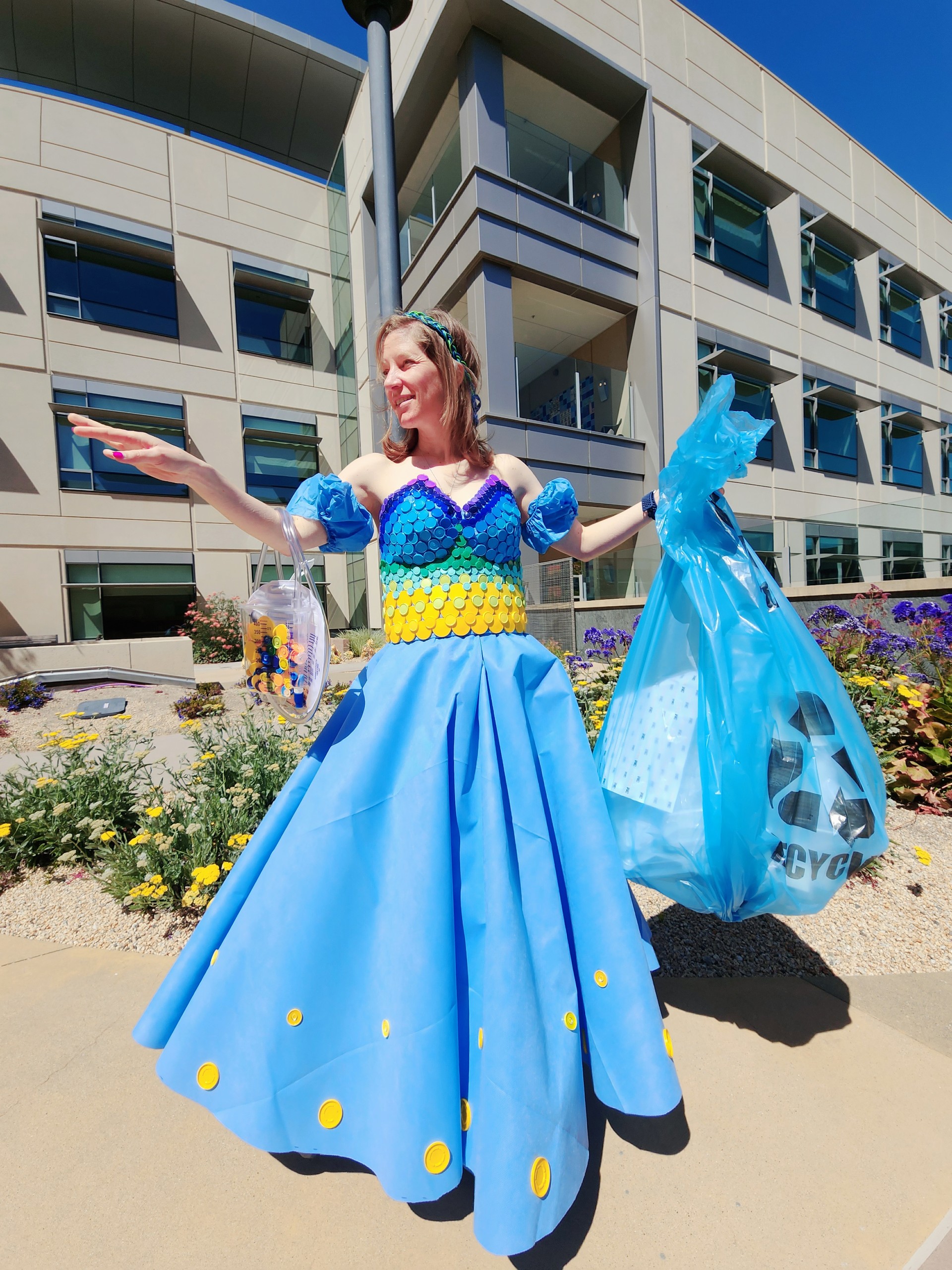
The Re-Gown is a wearable, fashionable, and eco-friendly dress made of 100% recycled operating room materials. This garment is made of unused surgical supplies such as disposable drapes, dressings, abdominal binders, sutures, shoe covers and medication caps. To accessorize, our model wore a crown made of braided cautery cords and bandages. To complete the look, our clutch purse was made of a foley drainage bag full of medication caps. This dress can also be reused by people of different sizes since it has an adjustable Velcro bustier and tie wrap skirt.
I was inspired by Project Runway, a reality TV show where designers compete to make fashionable clothes. Every season they must compete in an unconventional materials challenge. I love the thought of designing, creating and recycling at the same time.
The Re-Gown has reduced medical waste from reaching the overflowing landfills. This environmentally friendly dress is sustainable, fashion forward and runway ready!
By Ana Figueroa
 Clear Eyed
This wreath is made from a box that held cans of Ghia lime and salt non-alcoholic beverage. The brilliant color caught my eye, and I was inspired to upcycle the box into this spring wreath. I cut out over 50 leaves by hand and glued them onto a cardboard form, incorporating elements of the package design.
Beauty is everywhere, and while I’m grateful to live in a society full of nice things, I also waste things without a second thought. Seeing the potential in materials I'd usually throw away gives me a new perspective; a clear-eyed, inspired view!
By Jessica Gibbs
Bird Sanctuary
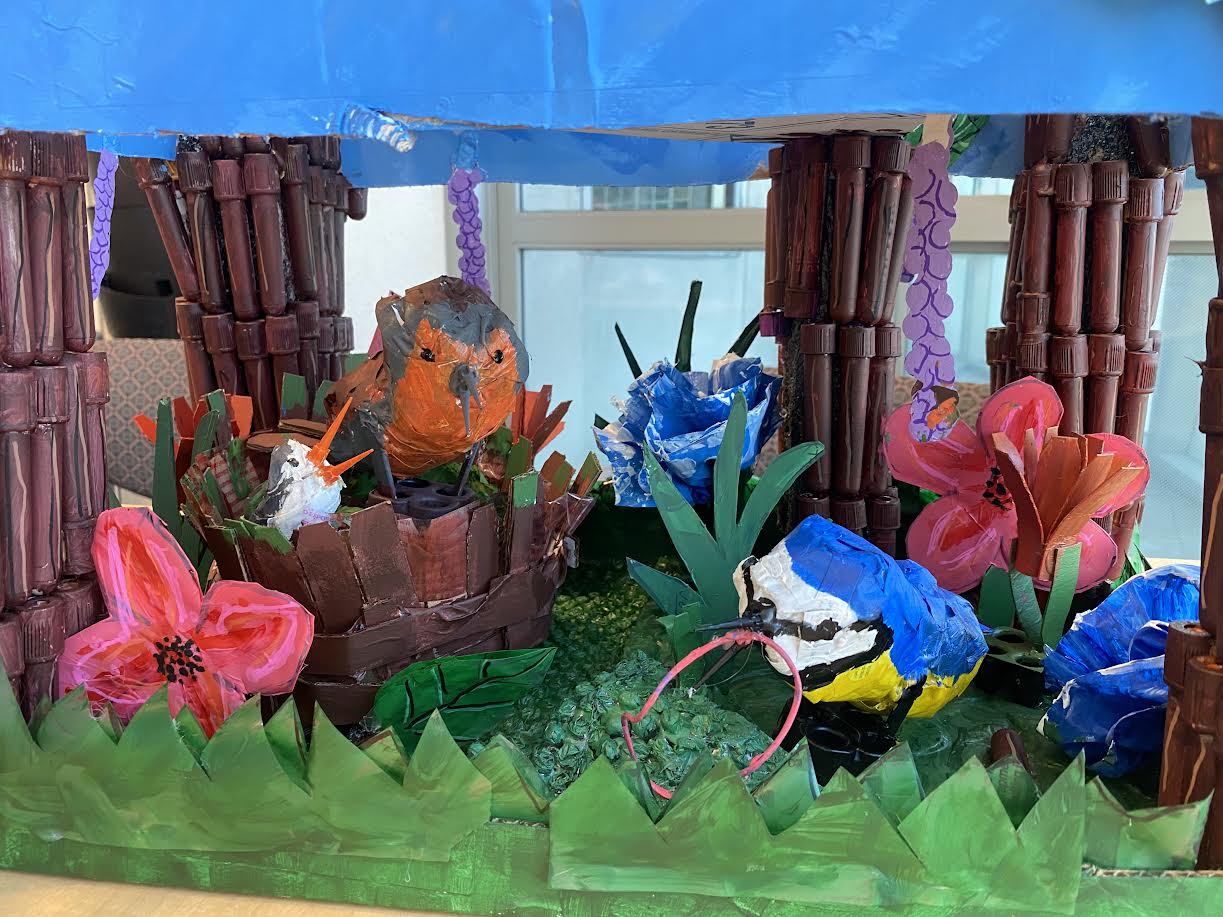
My piece describes a typical day in a bird’s life, collecting worms, feeding their babies, relaxing among the flowers. I wanted to do this environment because when we think about our trash impact we forget our smallest neighbors, who breathe in the toxins from our burnt waste, and at times collect plastic pieces for their nest or food.
Materials that were used in this piece included expired blood tubes, Styrofoam, microscope slide boxes, a cardboard box we received, plastic found throughout my lab from bags holding cryovial tubes, the plastic that covers the sticky part in a fed-ex shipping bag, plastic from the Avery shipping labels (the remaining plastic part on the back), bubble wrap , remaining tube top labels we use for samples, pipette tips, gloves. What inspired me to create this piece was my admiration for birds and enjoying my walks to the shuttle before and after work on the mission bay campus, I can always hear the birds sing and chirp about their day.
By Luz Torres Altamirano