As part of the University of California, UCSF Health is subject to the sustainable practices policy goals. Among them, meeting the waste reduction goal of 25 pounds of total waste* per adjusted patient day (APD) and then further reducing that to 20 pounds by 2030.
Additional goals include increasing diversion to 50% and maintain compliance with the City of San Francisco’s Refuse Separation Ordinance (RSO) which limits contamination in the waste stream to the following: 25% for landfill, 10% for recycling, and 5% for compost.
In fiscal year 2025, the organization generated 31 pounds of waste/APD, and did not meet the goal of 25 pounds. Reducing upstream waste production is a tricky challenge since it requires lots of interdepartmental collaboration and vendors and markets change constantly.
However, the organization did make significant progress towards the waste diversion goal, showing a 3% increase when compared to last fiscal year and successfully achieved RSO compliance for all UCSF Health locations.
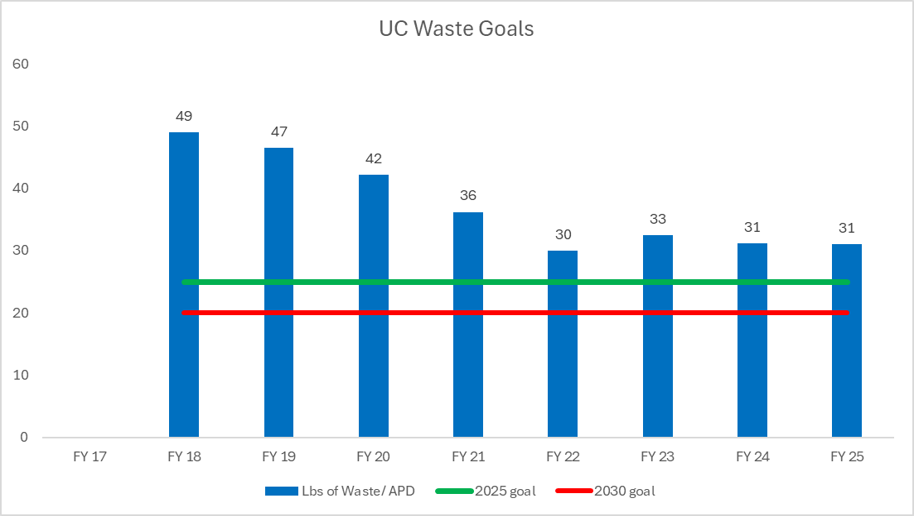 Figure 1: UCSF Health’s generated total waste over the past fiscal years
All in all, it was a busy year for the team. Here are the top five waste projects from FY25:
1. Implementing the zero-waste program at Bayfront Medical Office Building
Thanks to the work from the energy team, Bayfront is already a sustainable building. Our team expanded upon the sustainability features of the building by implementing a waste standardization program to ensure the capture of recyclable and compostable items. Our team added standardized waste stations, compost bins to all public restrooms, updated waste sorting signage, and trained staff of proper sorting techniques. Through these efforts, we were able to see an 11% overall reduction in contamination. Landfill contamination dropped by 6%, recycling improved with a 10% reduction, and compost contamination remained steady at just 1%.
2. Launching Blue Wrap recycling for the medical centers at Mission Bay, Parnassus Heights, and Mount Zion.
Blue wrap is a polypropylene fabric wrapping that protect sterile instruments before surgery and can be recycled with the proper vendor. Prior to this program, all blue wrap from cases would go into the landfill. We have since identified a vendor that can take all surgical blue wrap, melt it down, and pelletize it to be used again. On average, we are diverting 735 pounds per month.
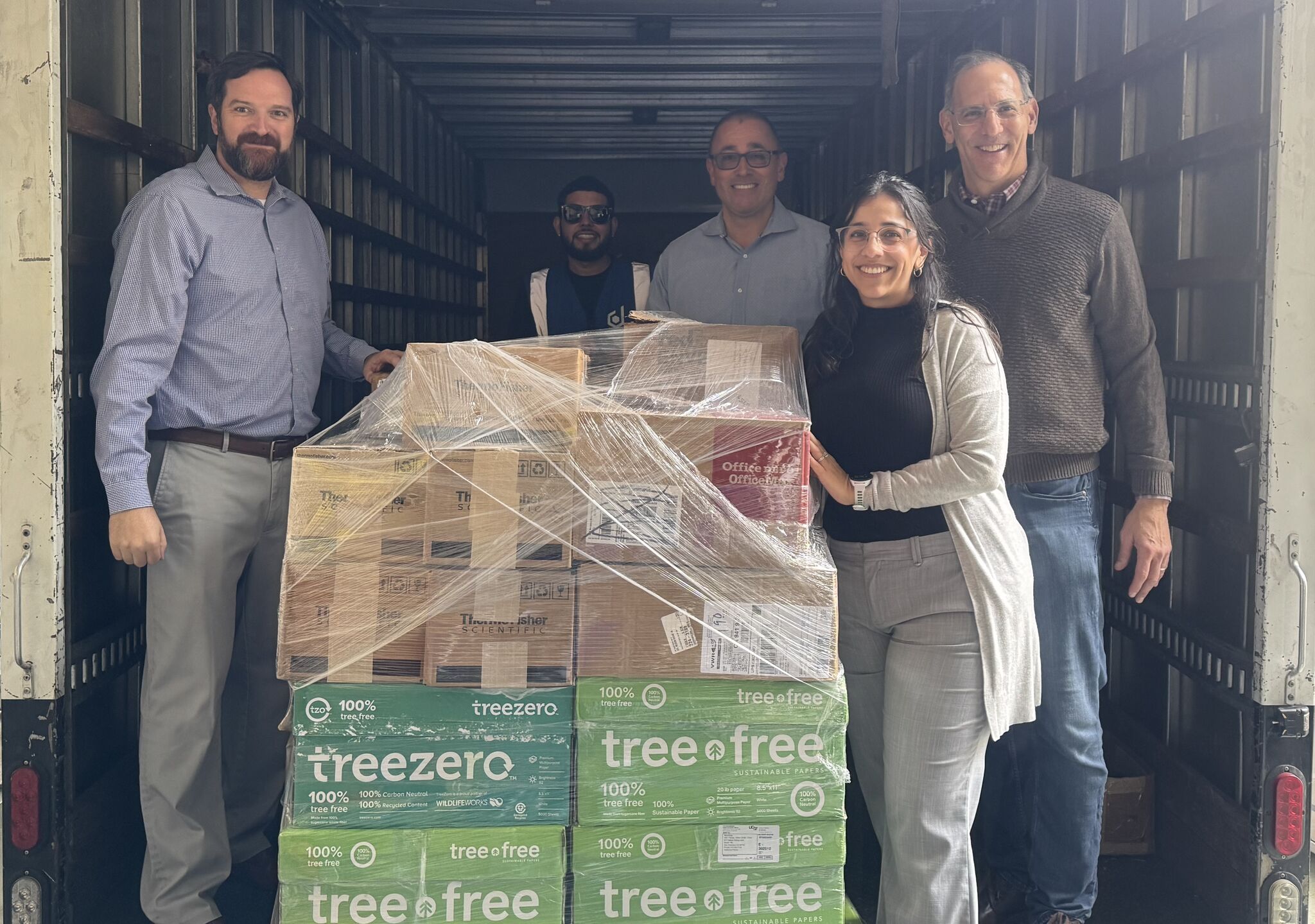 UCSF Health Sustainability Officer Isabel Navarrete and team processing Medcycle donations.
3. Establishing a Donation Program for Surplus Medical Supply
Due to hospital regulations, certain items cannot be restocked once it has entered a patient room. Oftentimes, these items are unopened, unused, and not expired, making them a perfect candidate for donations. We began a partnership with a local vendor to take these supplies from our hospitals and give them to community clinics around the Bay Area. Through this program, we are able to divert approximately 221 pounds per month.
4. E-waste Recycling programs for Mission Bay, Mount Zion, and Parnassus.
E-waste Recycling programs for Mission Bay, Mount Zion, and Parnassus. Every month, the Sustainability department hosts e-waste events throughout the medical centers, providing staff with a free and easy way to safely dispose of their electronics. On average, we are able to collect and divert 2,705 pounds of e-waste every month. All events are shared in the UCSF Calendar.
5. Launching reusable dining ware for dine-in customers
Sustainability partnered with Nutrition and Food Services (NFS) to launch two pilot programs at the Moffitt Cafe and Mount Zion dining rooms. The Moffitt Cafe at the Parnassus Medical Center is piloting reusable & fiber-based utensils as part of an effort to phase out single use plastics and is expected to divert 15,502 lb of waste in the six-month pilot window while the Mount Zion Cafe is piloting reusable dishware for dine-in customers. Given the success of both programs, the Shorestein Family Cafe at Mission Bay Medical Center has geared up to also launch a reusable dishware program.
*Practice Greenhealth defines total waste as municipal solid waste as well as all forms of regulated waste. This includes but is not limited to regulated medical waste, biohazardous waste, pharmaceutical waste, and universal waste. It does not include construction and demolition waste.