Why We Created Small Projects
With early planning assistance, dedicated funding for project-related costs, and transparent processes for approvals and coordination, these Small Projects initiatives aim to help UCSF projects move forward with greater clarity, fewer delays, and lower costs.
This pilot grew out of a cross-campus working group focused on improving the delivery of small projects at UCSF.
Learn how Small Projects started.
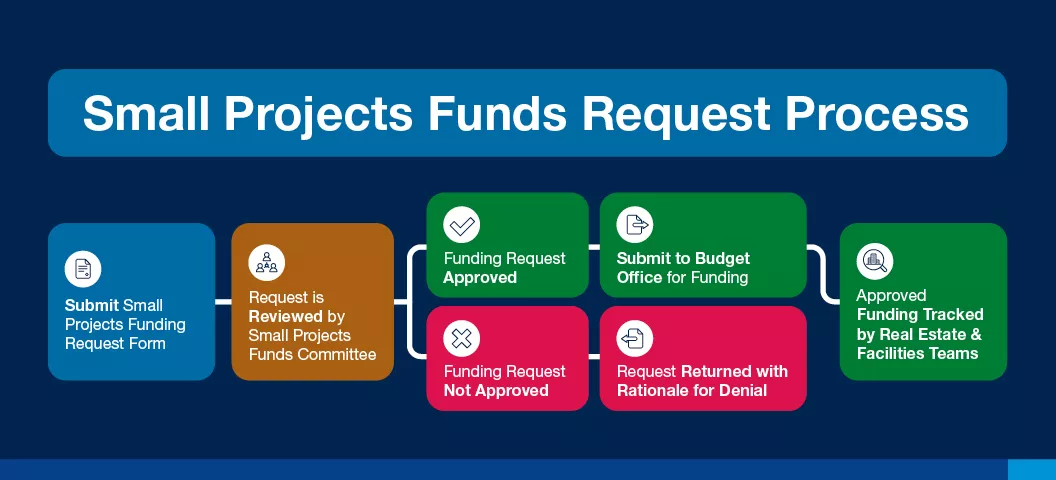
What Qualifies as a Small Project?
Small projects are generally defined as projects with construction and equipment costs under $640,000, though projects above this threshold may still be considered based on scope and governance review.
These resources are designed for the research and education community.
Explore our top three project initiatives to see which one is the best fit for you:
Early Support for Projects
Plan your project with clarity from the start. Early Support for Projects (ESP), led by Real Estate, is a program that provides funding and technical guidance before design and construction begin, helping you define your scope, budget, timeline, and next steps. Capital projects of all sizes are eligible for ESP.
This support replaces the traditional “study phase,” which is typically funded by the department requesting the project and can lead to additional back-and-forth, uncertainty, and delays. Instead, the Real Estate team assesses the project early to identify and solve the underlying need in a more consistent and cost-effective way.
Departments receive a clear, reliable project assessment with defined scope, budget, and timeline information—without additional upfront funding from the department — helping teams move forward with greater confidence and a more efficient path to execution.
How to Request Early Support for Projects (ESP) Funding
- Submit a project request and include “ESP” in the description
- Your request is reviewed and triaged
- If selected, ESP funding supports early planning
- You receive an ESP Report with recommendations
- Your project moves forward with a defined scope and path
Early Support for Projects FAQs
Project Fee Funding
Cover the costs that keep your project moving. Project Fee Funding, administered by Facilities Services, provides funding for essential project-related expenses beyond construction, including permitting, inspections, compliance, and Facilities support services.
What's included:
- Permitting fees
- Inspections fees
- Environmental Health & Safety assessments and fees
- All labor for UCSF Facilities project support services, including: Mechanical, electrical, and plumbing engineering design review for all permitted projects
- Advising project managers, consultants, and contractors on best practices, technical feasibility, and campus-specific requirements
- Shutdown coordination (physical access, jobsite walks, lockout/tagout)
- Connection of security system components (terminations), configuration of the system software (programming)
- Connection of fire alarm system components (terminations), and configuration of the system software (programming)
These are costs that are often required but are not always planned for in project budgets. By covering these items, this funding helps reduce financial barriers and ensures projects meet campus, safety, and regulatory requirements. The result is a smoother, more efficient project delivery process.
If your project could benefit from assistance with required reviews, coordination, or compliance-related costs, we encourage you to submit a request. We’re here to help keep your projects moving forward—efficiently and successfully.
Project Fee Funding FAQs
Older Building Fund
Addresses unexpected infrastructure needs that arise during the maintenance and improvement of older buildings. This includes aging building systems, hidden conditions uncovered during construction, and essential upgrades. Because projects in older buildings often involve unique infrastructure costs, this fund helps cover those expenses when they arise.
We know that needs may vary, and not every situation fits neatly into a box. That’s why we’re taking a flexible, case-by-case approach as we build a clearer framework together. Your requests will help shape how this program grows and supports our community moving forward.
Older Building Funds FAQs
FAQs
How does ESP differ from the traditional process of requesting a capital project?
ESP focuses on early planning and decision-making before a project is fully defined. Traditionally, a standard project request begins with a study phase, which is funded by the requesting department and can sometimes lead to uncertainty about scope, budget, timeline, or next steps. For qualifying projects, the ESP program helps departments move beyond the traditional study phase by reducing funding delays and back-and-forth that often accompany early project planning. Instead, the requesting department receives a clear, actionable project assessment with reliable scope, budget, and timeline information that can be used to pursue funding and move into execution more efficiently.
When should I request ESP for my project?
You should request ESP as early as possible, ideally when you first consider a project or explore options. Engaging early allows teams to identify the best approach, avoid rework, and prevent delays later in the process.
What types of projects are a good fit for ESP?
ESP is ideal for projects that require early planning, such as space changes, moves, new faculty or staff recruitment, and equipment installation. It is especially helpful when the scope, cost, or timeline is not yet clearly defined.
What does ESP provide?
ESP provides early planning support to help define your project scope, estimate costs, and establish a realistic timeline. It can replace the traditional “study” phase and identify the most efficient and cost-effective path forward, helping your project move more smoothly into design and construction.
How do I request ESP funding or support?
Submit a project request through the UCSF Real Estate portal and include “ESP” at the beginning of your project description. This helps us process your request for early support and review.
Your request will then be reviewed and triaged. If selected, ESP funding supports early planning. You will receive an ESP Report with recommendations, and your project moves forward with a defined scope and path.
What kinds of issues might qualify for Older Building funds?
This fund is intended to address infrastructure needs, such as aging systems, hidden conditions uncovered during projects, or necessary upgrades that weren’t originally included in a project’s scope. Because every situation is different, requests are reviewed on a case-by-case basis.
What does “outside of project scope” mean?
Sometimes, during construction or maintenance work, additional issues are discovered that weren’t part of the original plan or budget. Older Building Funds can help address those types of needs, so they don’t go unresolved.
Who can request funding?
Your assigned Real Estate or Facilities project team. If you’re unsure whether your situation qualifies, we encourage you to reach out and ask.
How do I know if my request is eligible?
This initiative is generally available for small projects, which are defined as projects with construction and equipment costs under $640,000. Projects above this threshold may still be considered following scope and governance review.
Since this is a new program, eligibility is intentionally flexible. If your request relates to infrastructure in an older building and doesn’t fit within existing funding sources, it’s worth submitting for consideration.
How are requests evaluated?
Requests are reviewed based on factors such as urgency, impact on operations, safety considerations, and alignment with overall facility priorities. We’re also using this first year to better understand common needs and refine criteria.
Is there a deadline to submit requests?
Requests are accepted on a rolling basis (unless otherwise communicated). Early submission is encouraged, especially if the issue may impact ongoing work.
Why is this program flexible?
Older buildings often come with surprises, and we recognize that not every situation fits neatly into predefined categories. This flexibility allows us to respond more effectively while we build a clearer structure for the future.
What types of costs are covered in Project Fee Funding?
These funds may be used for expenses such as Facilities Services labor related to shutdowns, design review, and project management. Also, permitting, inspections, and Environmental Health & Safety (EH&S) assessments and fees.
How do I know if my request qualifies?
If your project is a small project under $640,000, it qualifies. Projects above this threshold may still be considered following scope and governance review.
Can these funds be combined with other project funding sources?
Yes, in many cases these funds are intended to supplement existing project budgets, particularly for required but often underfunded support activities.