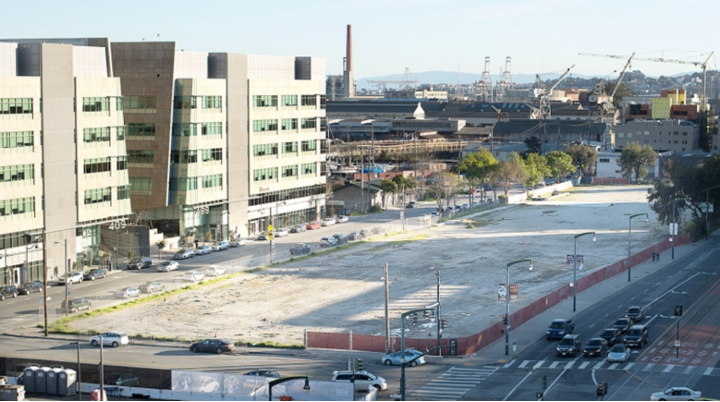
 UCSF completed an energy saving project in January 2021 on the Center for Vision Neuroscience building, in order to achieve LEED certification. This included improving the building’s heating and cooling system (also known as the building envelope), lighting, and HVAC flow. The project reduced the need for reheated air by using heat recovery strategies. UCSF collaborated with Affiliated Engineers (AEI) to compile baseline data and implement new emissions savings measures.
Background
Block 33, or Center for Vision Neuroscience building, is a research and administrative building in the Mission Bay campus of UCSF in San Francisco, California. Construction of the 385,319 sq foot building was completed in 2019, and it receives gas and electric from PG&E. While the building is relatively new, after completion, further inspection revealed energy saving opportunities. In order to improve the building envelope, AEI completed six ECMs:
- Installing a concrete panel wall system which captures heat during the day and retains heat during the night to reduce heating needs.
- Reducing the total lighting power density.
- Installing low turndown VAV boxes, which is an adjustable airflow box that can reduce flow based on the temperature changes and occupancy in once area of a building.
- Implementing an improved cooling system using high efficiency water-cooled variable speed centrifugal chillers which have a high energy efficiency ratio.
- Reducing reheat energy of previously cooled air by upsizing the VAV boxes and subsequently causing a 10% reduction in unnecessary cooling energy.
- Using a heat recovery chiller that captures waste heat and reuses it throughout the HVAC system of the building.
Results
Following implementation of the six measures, Block 33 has a resulting savings of 43,089kWh and 39,310 therms or 207.9 metric tons of CO2 per year, which amounts to $30,911.
UCSF collaborated with Affiliated Engineers (AEI) to compile baseline data and implement new emissions savings measures.
