Project Updates

Phase 1: B1 Level Completed
January 4, 2026
Thanks to the collaboration of our Project team, stakeholders, and the UCSF community, we are proud to share that Phase 1 of the Millberry Union ADA and Patient Wayfinding Project is officially complete.
Our team worked over 1600 hours to complete Phase 1, which included replacing the flooring across the entire B1 Level and finishing the demo for the new staircase. During this time, we also safely shut off electrical systems, a critical step in completing lighting upgrades.
As our team moves into the next phase of this project, we want to thank everyone involved in making Phase 1 a success, and we will continue to share timely updates on our progress.
 Facilities team members install new tile flooring.
 Facilities team members work on B1 level staircase.
Project Timeline
December 2025 – October 2026
- Phase 1: B1 Level | December 20 - January 4, 2026
Temporary closure with an alternate route available using ACC elevators
- Phase 2: Demo and Flooring Replacement on Parnassus Level | February 2 - February 17, 2026
No impact to access, work conducted after hours
- Phase 3: Ceiling Remodel, Demo and Repair | February 2 - April 27, 2026
No impact to access, work conducted after hours
- Phase 4: Wall Finishing, Paneling, Lighting, Window Graphics, and Furniture | Dates TBA
No impact to access, work conducted after hours
Background
Our ADA Upgrades and Pathfinding Project is focused on modernizing the main path of travel for all university and hospital patients. We're prioritizing compliance and easy navigation through a redesign that emphasizes several key features.
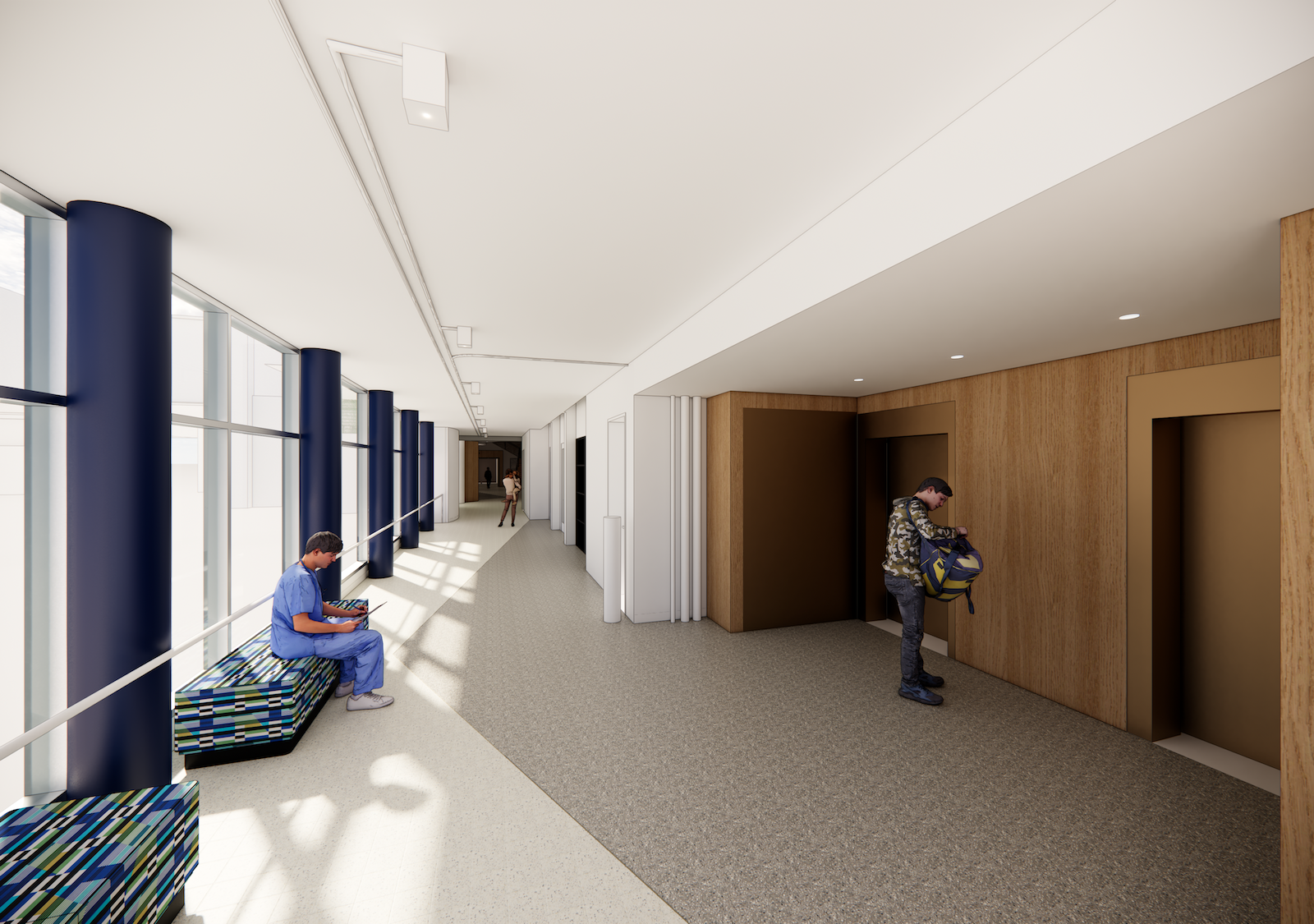
1. A Welcoming Gateway
The entry lobby will be bright and functional, offering easy orientation for patients, visitors, and staff as they enter the hospital and campus.
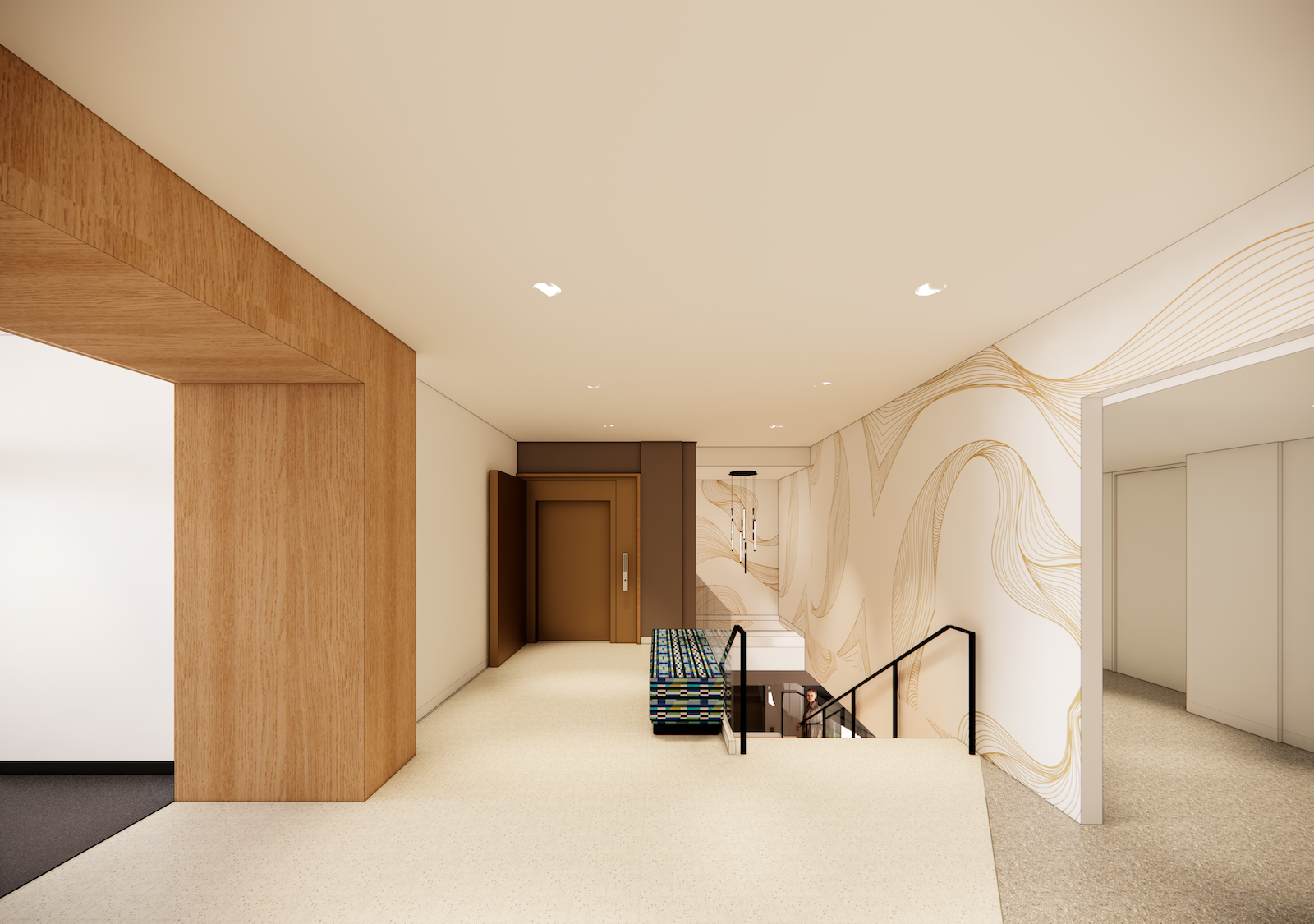
2. Comfort and Clarity
A minimalist design for clear wayfinding to create a calming, logical experience.
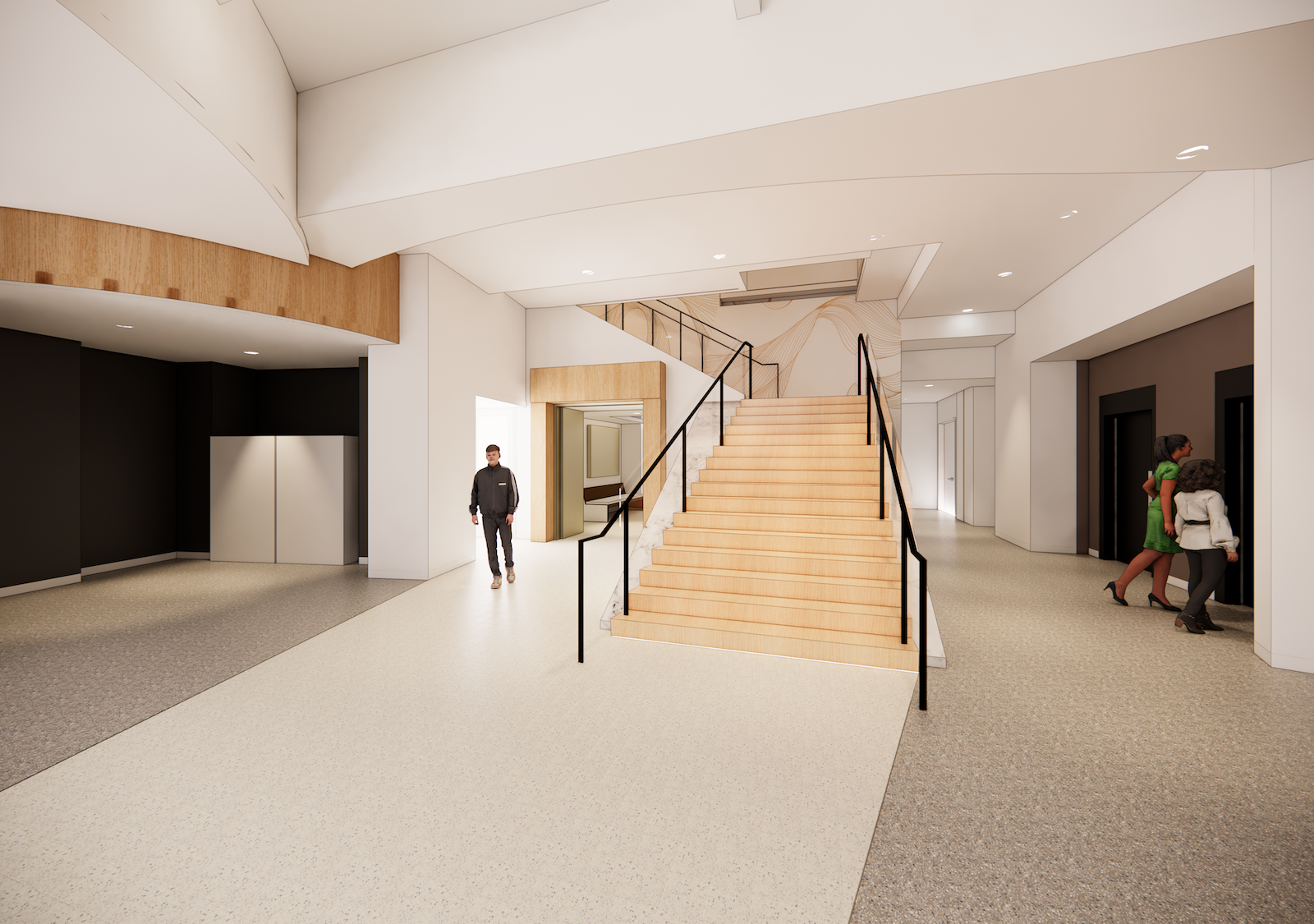
3. Safety
Increased lighting and removal of trip hazards for patient, visitor, and staff safety.
This page will be updated periodically with project updates and details as they become available. If you have any questions or want to learn more about this project, reach out to Alfredo Gonzalez at Alfredo.Gonzalez@ucsf.edu.
