Last year, the UCSF Health Sustainability team piloted a 90-day program to reduce plastic waste in healthcare. They partnered with Clear Drop, an organization that repurposes soft plastic to hard plastics using a soft plastic compactor (SPC), to divert waste from the landfill. Since San Francisco’s recycling hauler, Recology, only accepts hard plastics, most soft plastic film waste from pharmacies and other departments goes to the landfill. This is extremely harmful to the environment, as plastics can make up to 30% of healthcare waste, with the US alone generating 1.7 million tonnes of plastic waste annually. The UCSF Health Sustainability Department decided to test out this program to assess the need for a soft plastic compactor and reduce plastic waste effectively.
How it works
UCSF Health started with two trial programs, one at the Mission Bay Pharmacy and one with the Mount Zion receiving team.
Similar to a paper shredder, the SPC has a slot at the top where users can feed in soft plastics like #2, #4, #5, and #7 plastics. Another option is bulk loading, where users can open the top and put the plastic in all at once. The device cannot accept PVC or polystyrene.
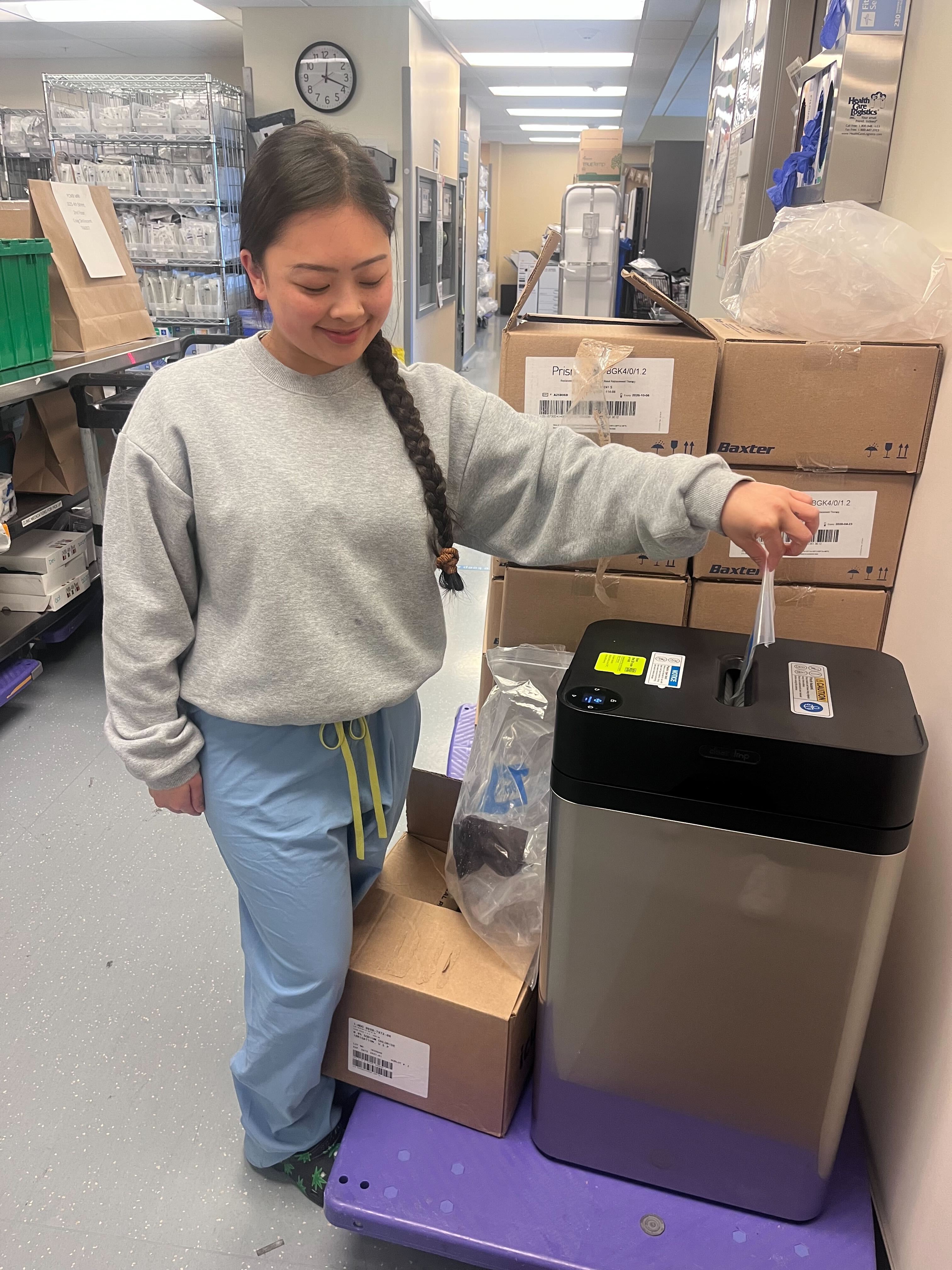
Once full, the deviceheats up the soft plastic inside and creates a hard plastic block, about the size of a shoebox. This allowed both departments to convert large volumes of soft plastic into a dense and compact material, making it easier to transport and store.
For the duration of the pilot program, the blocks were shipped to Clear Drop’s headquarters to be pelletized into other forms of plastic, diverting waste from the landfill.
Over the 90-day pilot period, the Mission Bay Pharmacy and Mount Zion Receiving departments produced about 88 blocks and diverted 330 pounds of plastic.
Early Success
Feedback from staff was overall positive, with the Mission Bay team expressing that they felt good about saving some plastic and saving the Earth. Both hospitals found that hand feeding the plastics into the compactor was more successful than bulk loading, because bulk loading is denser and would not compress properly in the compactor, causing the blocks to break in half. Due to the large plastic wrap materials used in the Mount Zion Receiving Department, they faced challenges including long processing times, bricks falling apart due to bulk loading, and some staff decided to stop using the device altogether. Because of these issues, the Mount Zion Receiving team decided the SPC was not a good fit for their department. 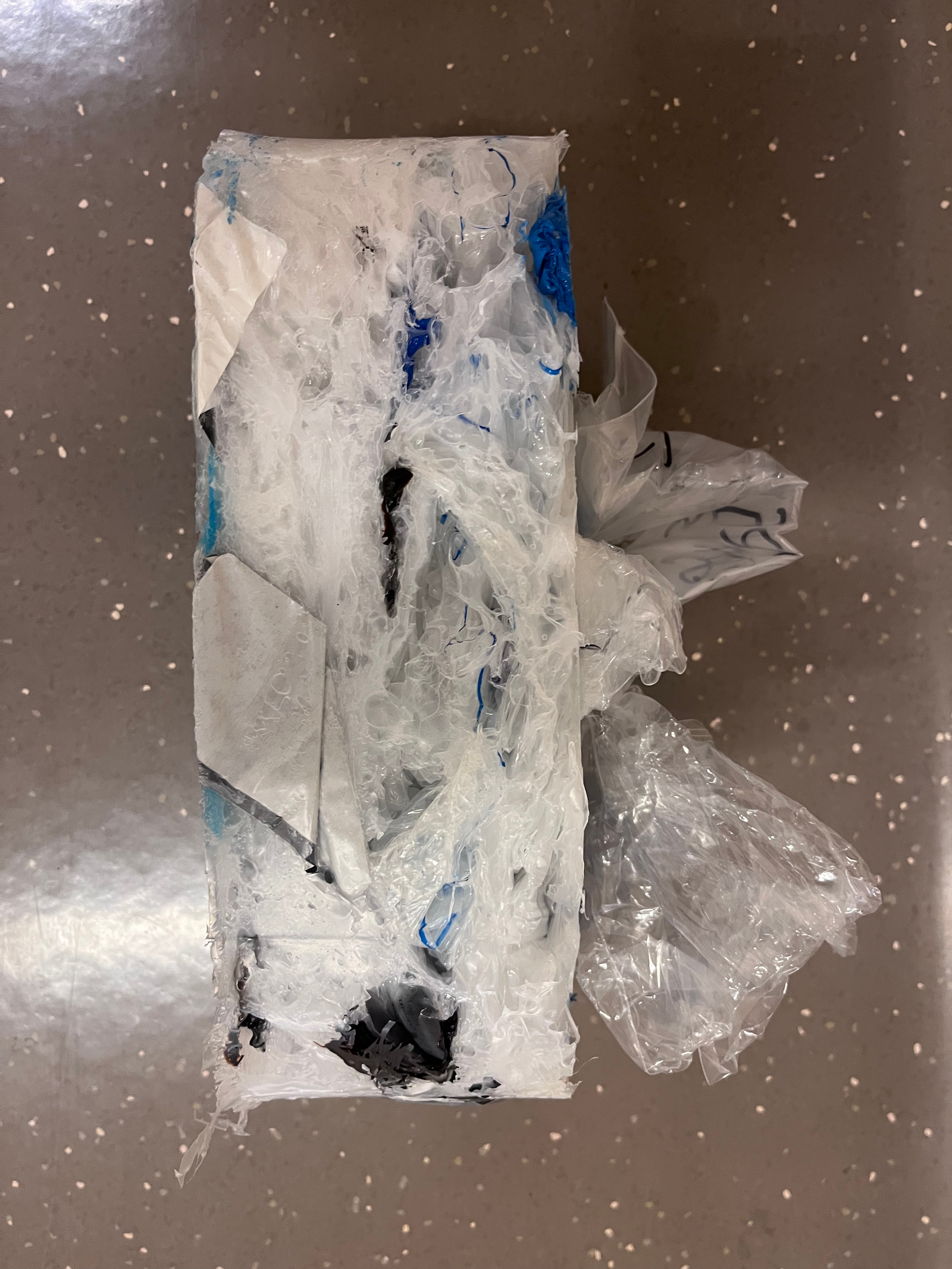
However, the Mission Bay Pharmacy expressed that they would like to continue using the SPC if this program becomes permanent. Due to the success at the Mission Bay Pharmacy, the Mount Zion Pharmacy decided to trial the device as well, with the pilot starting in late January 2026. This pilot will help inform next steps as the team works to secure funding to make this project a permanent program.
Lastly, this pilot program wouldn’t have been made possible without the time and effort from our dedicated staff. Champions of the program include Marin Ivesic, Vinnie Ortiz, and Jenn Chu. Marin played a key role in supporting implementation at Mount Zion, while Vinnie Ortiz and Jenn Chu provided strong support at Mission Bay.
If you are interested in learning more about soft plastics recycling, let us know by emailing healthsustainability@ucsf.edu.