A conversation with Kira Stoll, chief sustainability officer and executive director for the Office of Sustainability.
You were just named as one of The Top 25 Women Chief Sustainability Officers for 2025 from Women We Admire, alongside leaders in finance, education, health, and large private sector companies. What did it mean to you to receive this award, and how does it help put UCSF on the map for national conversations about sustainability?
One of the really wonderful things about it was that it was unexpected. For me, it felt like a recognition of a body of work and a long-term focus on improving the environment - one that brought me to this moment to partner and lead on UCSF’s next phase of the sustainability journey. My experience in the sustainability field is that it's full of smart and visionary women, and it's important for our leadership to be recognized in this way.
It was also meaningful that it was a recognition from an organization that is not just looking at sustainability or climate action, but is looking across the spectrum of women who are contributing to leading the world.
How did you first get interested in sustainability in general?
My father was a transportation planner in the Bay Area in the 1970s and 80s, and his focus was on moving away from highways that were separating neighborhoods and increasing car traffic in urban areas, and making public transit work for people.
I grew up with a love for public transit and weekend rides for fun on BART.
I think about transportation as one of the originators of the current sustainability movement at UC because there's been so much action over the last 40 years on a variety of less polluting options to support how people want and need to move around on our campuses and health centers.
Prior to becoming the Chief Sustainability Officer and Executive Director of the Office of Sustainability at UCSF, you were the Chief Sustainability and Carbon Solutions Officer at UC Berkeley.
What has this transition been like, and what experiences from your time at UC Berkeley have brought into your role here at UCSF?
I've had a long and wonderful career at the University of California. UC San Francisco is the third UC campus that I've had an opportunity to work at. I joined UC Berkeley as the campus transportation planner and was fortunate at the time to be part of an emerging sustainability movement across higher education, being led by the University of California and by students. I was swept into the sustainability career, expanding my transportation horizons, and joined the first office of sustainability at UC Berkeley.
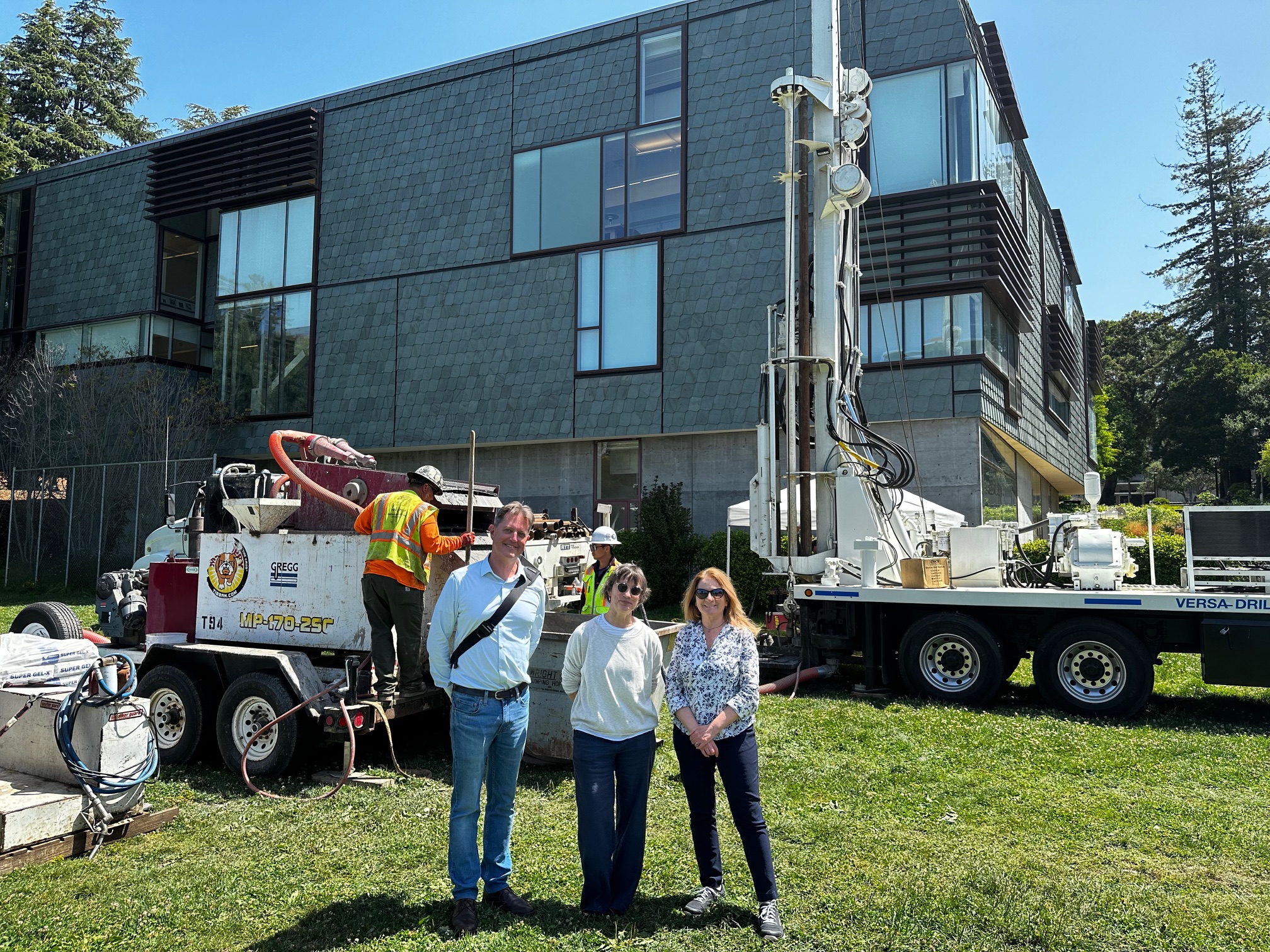 Kira Stoll on site during borehole testing to determine the feasibility of geothermal heat exchange for UC Berkeley's clean thermal plant.
My focus there was a broad range of sustainability matters, with a real focus on climate action. I developed their first climate action plan to reduce the carbon footprint of the campus, addressing early measures around energy efficiency and adding solar energy systems and procuring clean electricity. The last five years of my work at Berkeley focused on replacing the aged fossil fuel cogeneration plant and steam system with an electrified and renewable energy one – when this transition is complete it will virtually eliminate campus building energy carbon emissions.
As this project went into design and construction, I felt it was a good time for me to go to another organization that may be looking to do the same. It is great that UCSF and I were aligned and made the match.
What do you hope that people understand about the work that the Office of Sustainability does?
We're here to build a community around sustainability and enable good ideas and projects that people have to move forward. We are passionate, reliable partners in whatever way we can be. And sometimes that's just facilitating conversation or making a connection.
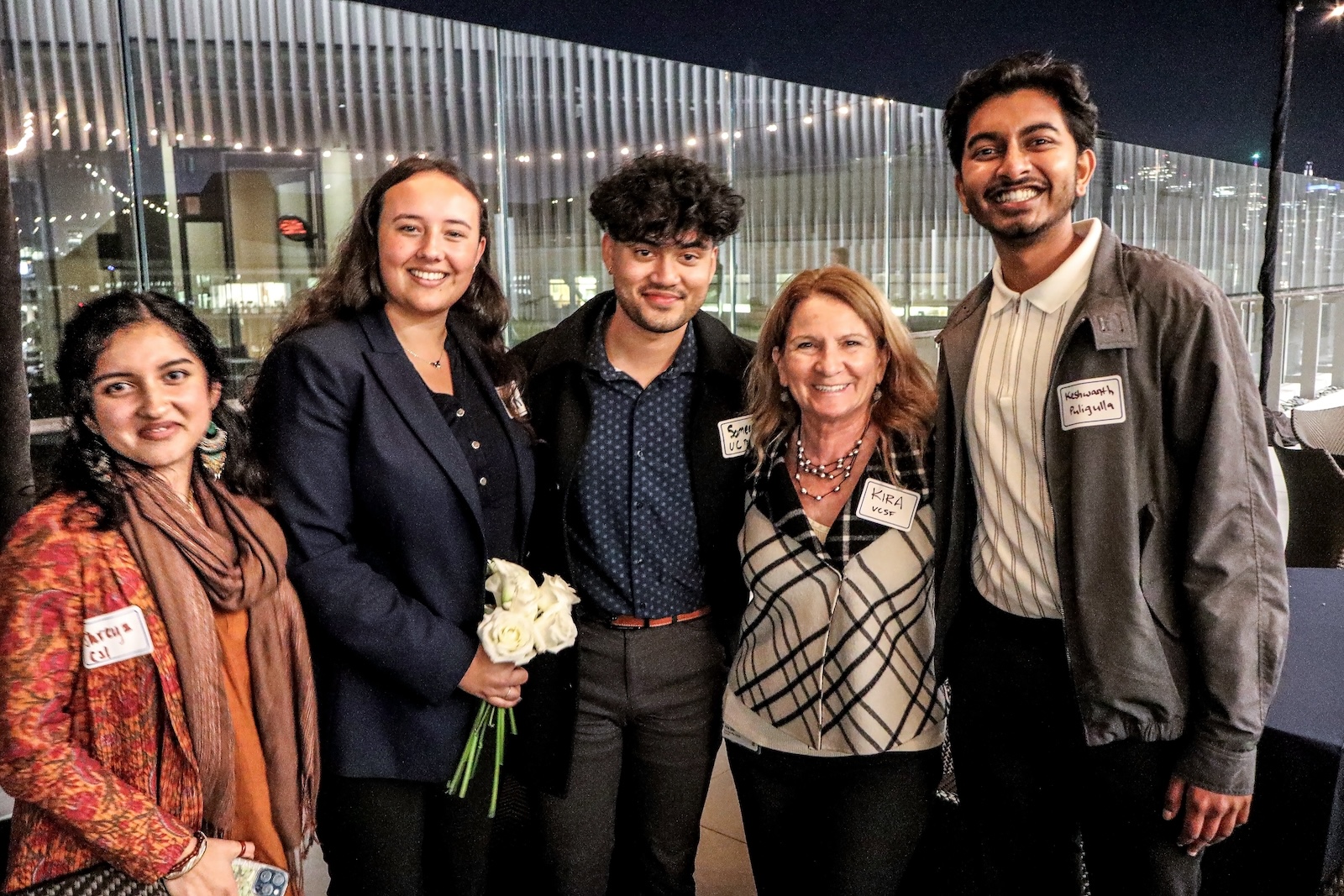 Kira Stoll poses with UC Climate Fellows at the Global Climate Leadership Committee reception hosted by UCSF. Photo by Sean Aloise.
I also want folks to know that the Office's program for campus and health is driven by a comprehensive UC policy on sustainability practices, that includes 13 areas of goals and priorities. We are stewards of elevating and bringing these challenging and positive changes to UCSF.
This work is interconnected with what Campus Life Services (CLS) and Financial and Administrative Services (FAS) does - it's important we are part of the family.
Tell me a little bit about your approach to this role and the priorities that you have.
One of the reasons I wanted to come here was to have that experience of working in a health care and learning institution. There's a connection between addressing environmental issues and addressing climate change, from the perspective of health, people, and planet, that has a depth to it.
I've found that the faculty that I've been able to work with so far, along with staff, have a will and focus around addressing climate change that is pretty amazing.
How do you manage to hold this vision of a future 20, 50, 100 years from now, with the current actions that we're doing on a micro level?
I think you can live with both. For me, the things that I might do on a daily basis has more meaning, if they are within the context of something larger.
So, while sometimes it may feel like all I'm doing is throwing this piece of paper in a recycling bin, when put into the context, if 30,000 people do that here at UCSF today, that has meaning.
Is there a sustainability action that you take in your personal life that feels particularly meaningful for you?
One of the things that I think about when I talk to people about sustainability is that it's what we do as a whole that makes a difference and to focus on what you can impact and has meaning to you.
The areas that I think I thrive in around sustainability personally are in my daily choices – how I move around by transit or walking and what I eat, being so fortunate to have access to local and organic produce and fantastic sustainably focused restaurant options.
Over the long run, I’ve been transitioning my life away from fossil fuels – electrifying my lifestyle – as opportunities arise for replacement. I think it's a journey for everybody, to find the things that work best and resonate.
Working in sustainability can sometimes feel bleak or overwhelming. Where do you turn to find inspiration or a sense of optimism?
When I started here I got this poster of the wild world to hang in my office, along with all my maps of UCSF sites. An artist drew the animals in the part of the world where they are. Sometimes during a day when I need a lift, I will go look at it and see what part of the natural world I might focus in on.
 A Wild World Map hangs in Stoll's office as inspiration (photo courtesy of Anton Thomas).
*Header photo courtesy of Noah Berger.