In 2022, UC San Francisco became the first educational institution to partner with Polycarbin, a platform for recycling and remanufacturing lab plastics, to launch their pilot lab plastics recycling program.
The program was launched with the support of Assistant Director of the Recycling and Waste Reduction Program Daniel Chau who received the 2024 Founder’s Day Exceptional University Service Award for his work.
In the last two years, the pilot has grown to include nearly 30 participating labs across Mission Bay, Parnassus, and Pride Hall with plans to further expand this year. Since the program’s inception, UCSF has successfully diverted 36 tons of lab plastic from the landfill.
“Buying back plastics locally reduces the carbon footprint of manufacturing and supports the creation of local jobs in Richmond and Sacramento,” Chau said.
Of the plastics that are sent in, 70% are turned into new consumables that can be bought back. In 2024, UCSF bought back more lab plastics than in all previous years combined.
“This creates a circular economy that provides a supply of lab plastics at a reliable rate that is independent of outside market fluctuations,” Chau said.
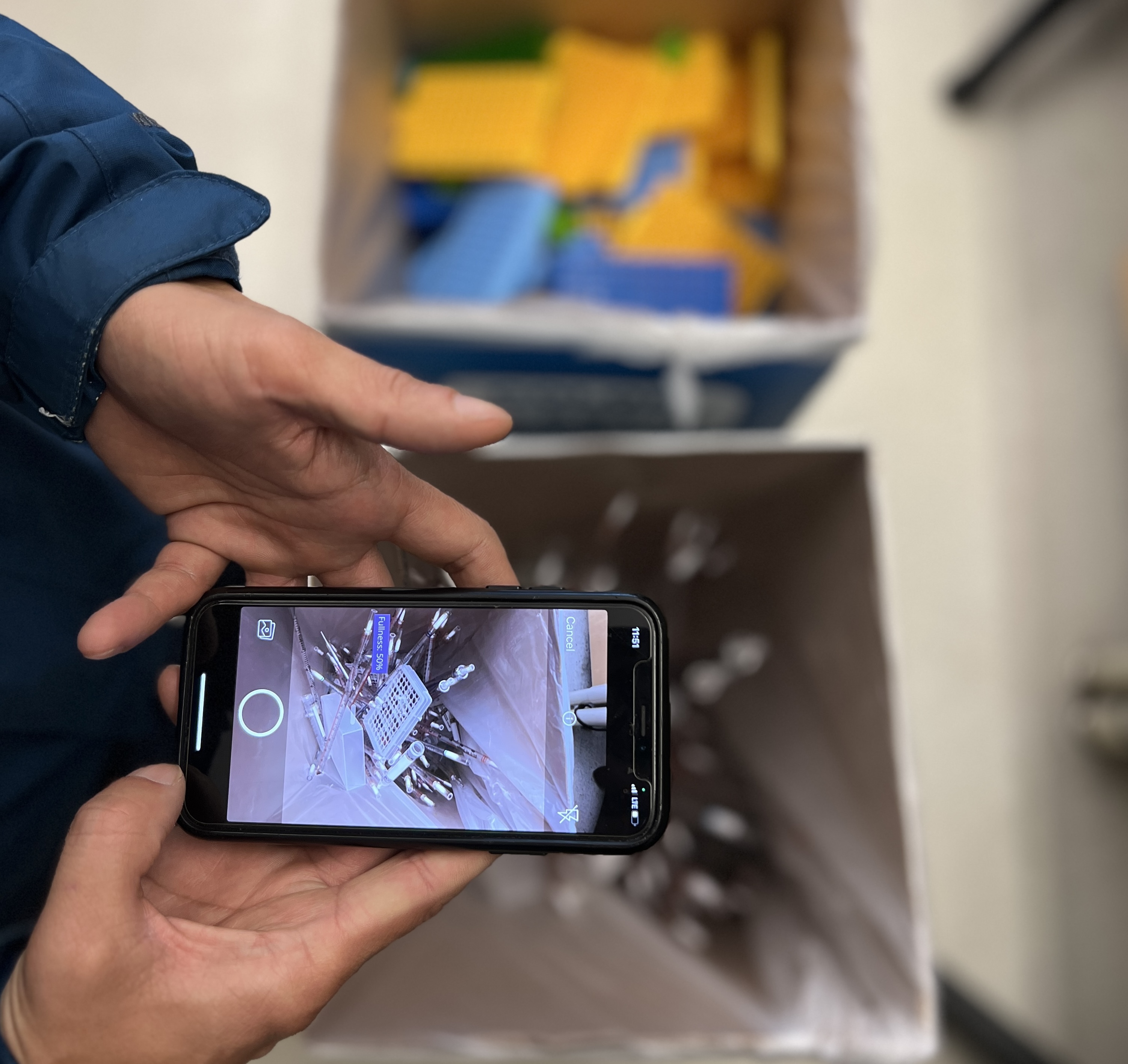 Lab plastics are photographed and logged before being transported for recycling.
Clif Duhn, Lab Operations Manager at the Pollen Lab, uses these recycled plastics for his research on developmental neuroscience, which focuses on “the genetic influences that have contributed to neurological vulnerabilities and specializations in humans as compared to other primates.”
“This program has been integral for minimizing the waste from our lab! Plastics are a large part of most any kind of research. Knowing that so much is being diverted from the landfill lessens the stress of the impact that we are having on our environment otherwise,” Duhn said.
For Duhn, the existence of this program is proof that scientific research does not have to come at the cost of harming the environment.
“A lot of the lab plastics that we use are unable to be recycled through traditional recycling programs, thus, without a program such as this, so much waste ends up in the environment. When you consider the multitudes of labs at UCSF, the implementation of this program has the potential for a lot of diversion! The scientific process should not come at the sacrifice of our Earth, and vice versa,” Duhn said.
Dana Smith, Biochemistry and Biophysics Specialist, had been searching for a responsible way to recycle single-use lab plastics for a long time. She heard about the Polycarbin program from Chau when he made a presentation to the Steering Committee of the Lab Resource group.
“My lab offers a telomere length assay for research collaborators all over the world. This assay is high throughput, but we generate a lot of plastic waste. I feel better knowing the plastic won’t immediately go to a landfill and hope that it being made into more plasticware will keep it that way. I really appreciate the convenience of someone collecting the plastic from our lab.
Not only is the program convenient and practical, Smith says, but it offers scientists the opportunity to feel good about their work from a sustainability standpoint.
“I find that lab members really want to use this program. Scientists are often driven by feeling that the work they are doing is good; having a responsible way to dispose of plastic makes them feel even better.”
If your lab is interested in participating, you can sign up for the Polycarbin program here.