Ovaries, testicles, adrenal glands, pancreas, hypothalamus, and thyroid are just a few glands and organs that make up the human endocrine system. The system is responsible for producing and releasing hormones that regulate your body’s healthy development and function throughout life.
Endocrine disrupting chemicals (EDCs) are substances that interfere with the normal function of your hormones, which regulate everything from breathing and hunger to sleep. These disrupting substances are found in the air, soil, water supply, food sources, personal care products, and manufactured products. The United States EPA lists developmental malformations, interference with reproduction, increased cancer risk, and disturbances in the immune and nervous system function as possible effects of EDCs.
Don’t Eat From, With, or On Plastic.
Don’t Eat Plastic.
 Katie Zheng, sustainability analyst,
UCSF Office of Sustainability
Plastic products, especially ones used for heating, consuming, and storing food are responsible for a regular flow of EDCs into our bodies. Women, children, and people of color are particularly vulnerable as they often carry a disproportionate burden of exposure. UCSF Office of Sustainability conducted a pilot program to educate and reduce cost barriers to adopting safer alternatives to plastic for pregnant people and new families within the UCSF community.
“Because people of color are disproportionately exposed to chemicals of concern, our target audience was Black, Latinx, Asian, and English Second Language (ESL) employees and learners. A majority of our 39 participants were from White and Asian backgrounds, with several Latinx and no Black participants. We found it a challenge to reach our target audience, but were glad to see so many people interested in the program," says Katie Zheng, sustainability analyst, UCSF Office of Sustainability.
 Sandra Curtis, PhD, a principal
investigator with Public Health Institute
Participants were asked to take a pre-session survey, watch a presentation developed by the program, and take an exit survey. The presentation was led by Sandra Curtis, PhD, a principal investigator with Public Health Institute, who served as a consultant on this program. It expanded on a previous project she initiated entitled ReThink Plastic funded by the California Breast Cancer Research Program.” As an incentive and a good habit-building initiative, they also received a starter kit of safe alternatives to plastic. The kit included products like glass containers and baby bottles, silicone lids, and beeswax wrap.
Findings
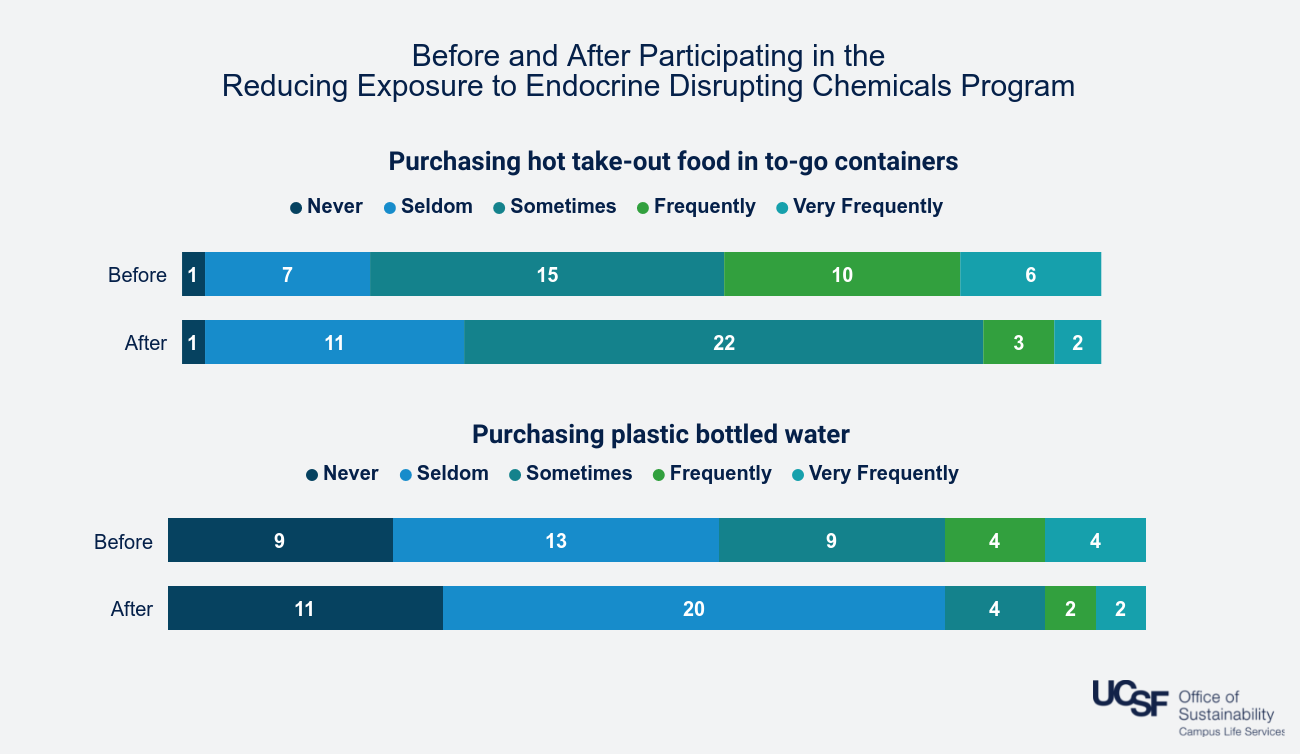
Target behavior change occurred in each surveyed category with most changes being statistically significant. Participants reported a significant increase in understanding of reducing their exposure to the chemicals in plastic. One participant shared, “I switched from using plastic containers for storing breast milk to the provided glass containers. Thank you!”
Specific findings include significant decreases in:
- microwaving foods in take-out and plastic containers
- purchasing hot take-out food and drinks in disposable cups
- purchasing and drinking water from plastic bottles
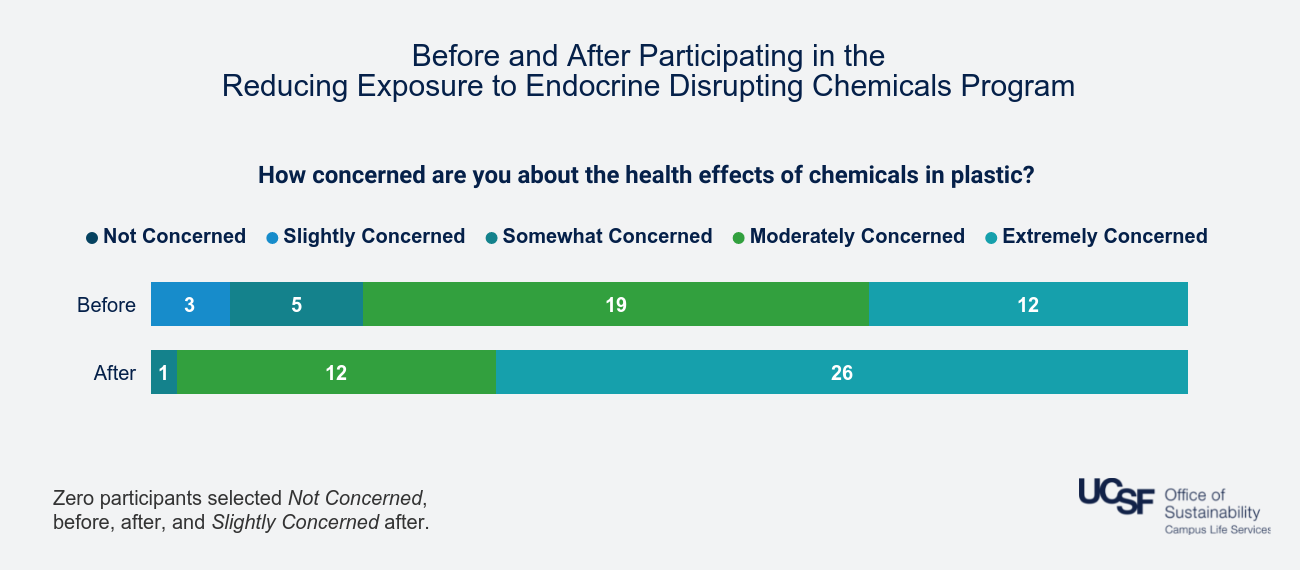
The increase in concern about plastic pollution and the health effects of chemicals in plastics was significant, shifting from somewhat or moderately concerned to extremely concerned.
"We're excited to have documented statistically significant increased knowledge of EDCs and resulting behavioral changes among the participants in this study. They demonstrated a strong, positive commitment to learning along with a desire to integrate the use of safe alternatives for better health outcomes for themselves and their infants," says Curtis.
Tips for Breaking Up With Plastic
Here are some ideas for safer substitutes to using plastic wrap or plastic bags with food items:
- Use dishes and cover with plates rather than cling/plastic wrap when storing leftovers.
- Use wax paper for wrapping sandwiches.
- Request butcher paper for wrapping meat purchased at a meat counter.
- Offer babies liquid in stainless steel cups with silicone lids instead of plastic sippy cups.
For more tips visit Wellbeing Grant: Reducing Exposure to Endocrine Disrupting Chemicals
Two-Year Plan
After wrapping up the EDC exposure pilot project, the team received celebration-worthy news that the City would fund an expanded version of this project benefiting UCSF and ZSFG OB patients.
This means their work is not done and more news about the City grant will be forthcoming. Get updates on this project.
The pilot project was funded by the Well-being Grant.