In 2023, UCSF Health Sustainability launched a staff suggestion portal to crowdsource ideas for reducing waste in clinical workflows.
“I saw the QR code post on my unit asking for staff input on ways to reduce waste,” said Esther Rov-Ikpah, RN-BC, MS, CDCES, ADM-BC, a diabetes specialist nurse. “I also heard Dr. Seema Gandhi’s presentation at the Advanced Practice Providers Grand Rounds on sustainability, and I reached out and connected with her after. Her passion for waste reduction inspired me to act.”
Motivated by that message, Rov-Ikpah submitted a proposal to reduce insulin pen waste—an issue she encountered daily in patient care.
Understanding the Problem
At UCSF, most inpatients with diabetes are managed with insulin pens, which contain multiple doses administered over the course of a hospital stay. Other “bulk” medications include inhalers, eye drops, and topical creams.
However, these bulk medications are often dispensed more than once when patients transfer between units, even if an existing medication is still available. This duplication results in financial waste, unnecessary labor, and environmental impact.
“It breaks my heart to see so many insulin pens go to waste when, in some communities, people don’t even have access to them,” Rov-Ikpah said.
Each discarded insulin pen must be disposed of in black hazardous waste bins and incinerated, a resource- and energy-intensive process that contributes to emissions and material waste.
Collaborative Solutions
A comprehensive analysis identified three key drivers of duplicative insulin pen dispensing. Rov-Ikpah convened a multidisciplinary team—including nursing, pharmacy, informatics, and sustainability partners—to address each one.
- Promoted Education and Awareness
- Co-created an animated training video now featured in the annual nurse education on insulin pen workflow.
- Installed signage in medication rooms reminding staff to send blue-labeled medications with patients during transfers.
- Standardized Medication Transfer Protocol
- Partnered with nursing leadership and informaticists to update the medication transfer workflow.
- Added a dedicated medication row in the EPIC transfer navigator to ensure continuity of care.
- Created Clinical Guardrails
- Collaborated with Pharmacy to implement a clinical alert in Pyxis MedStation, prompting nurses to check for existing insulin pens before dispensing a new one.
Measured Impact
These interventions, rolled out in phases, now work together to create a smoother, safer, and more sustainable workflow for bulk medication transfers and significant impact on waste reduction. Compared to the FY23 baseline, we have seen 15% and 20%, respectively, in duplicative dispense for FY24 and FY25, and about $60,000 inannual savings
“The analytic support and leadership engagement from the Office of Sustainability and Dr. Gandhi have been tremendously helpful in the success of this project,” Rov-Ikpah said.
To further raise awareness, Rov-Ikpah created an art piece made from used insulin pens for the 2025 Waste to Art contest—a striking visual reminder of the hidden waste in healthcare.
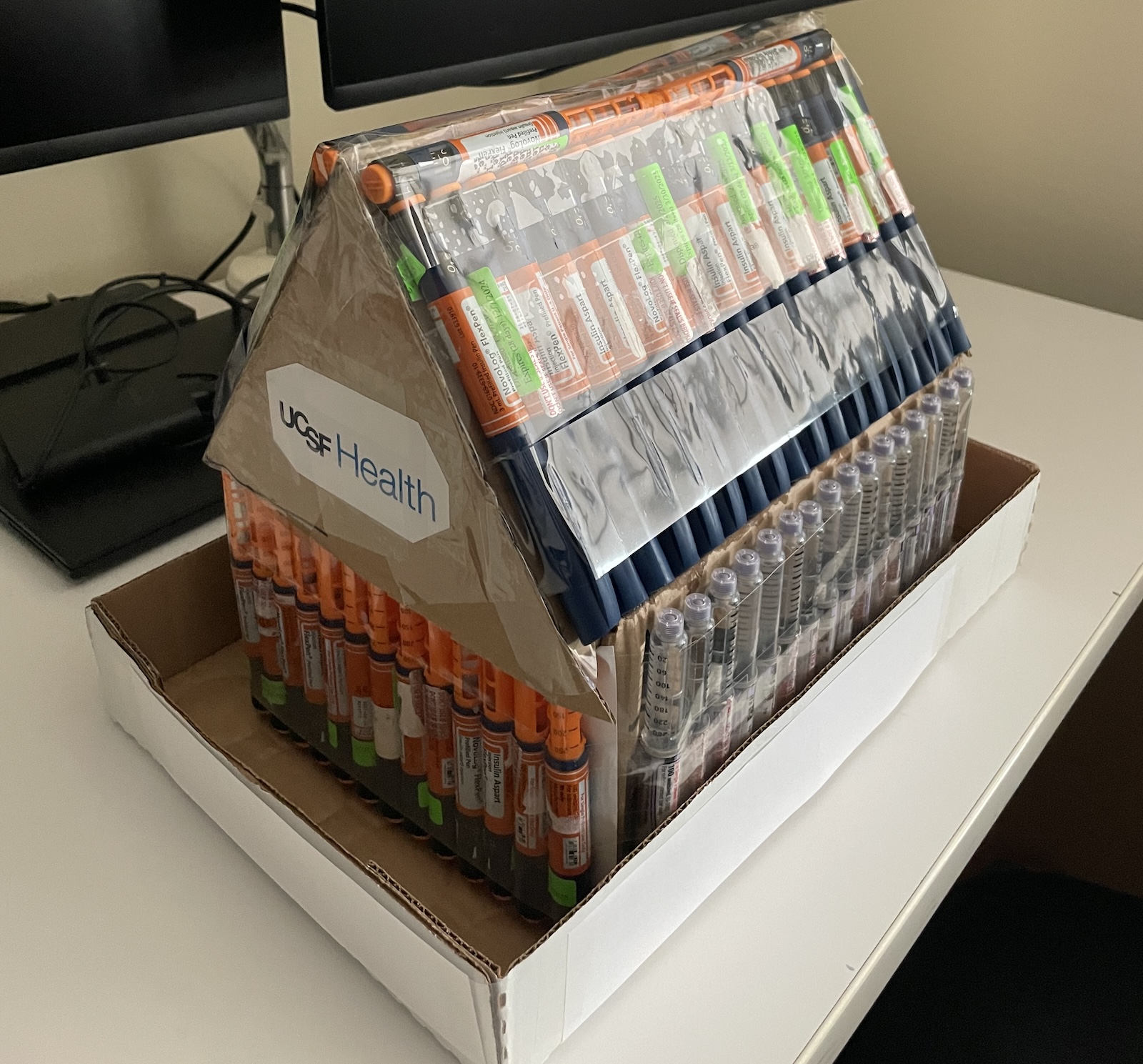 Ikpah collected discarded insulin pens to construct the "Pen House" for the 2025 Waste to Art contest.
She and Jimin Lee, PharmD, a key collaborator in the initiative, presented their work at the Clinical Inquiry Conference in September, where it was met with enthusiasm and praise.
Rov-Ikpah's success demonstrates how frontline clinicians can lead the way in sustainability—bridging patient care, operational efficiency, and environmental responsibility. Her work reinforces a simple but powerful truth: every action matters, and change often starts with those who care enough to notice.
Grassroots innovation, clinical leadership, and cross-department collaboration can transform small ideas into lasting systems change—improving care while advancing UCSF Health’s commitment to sustainability.