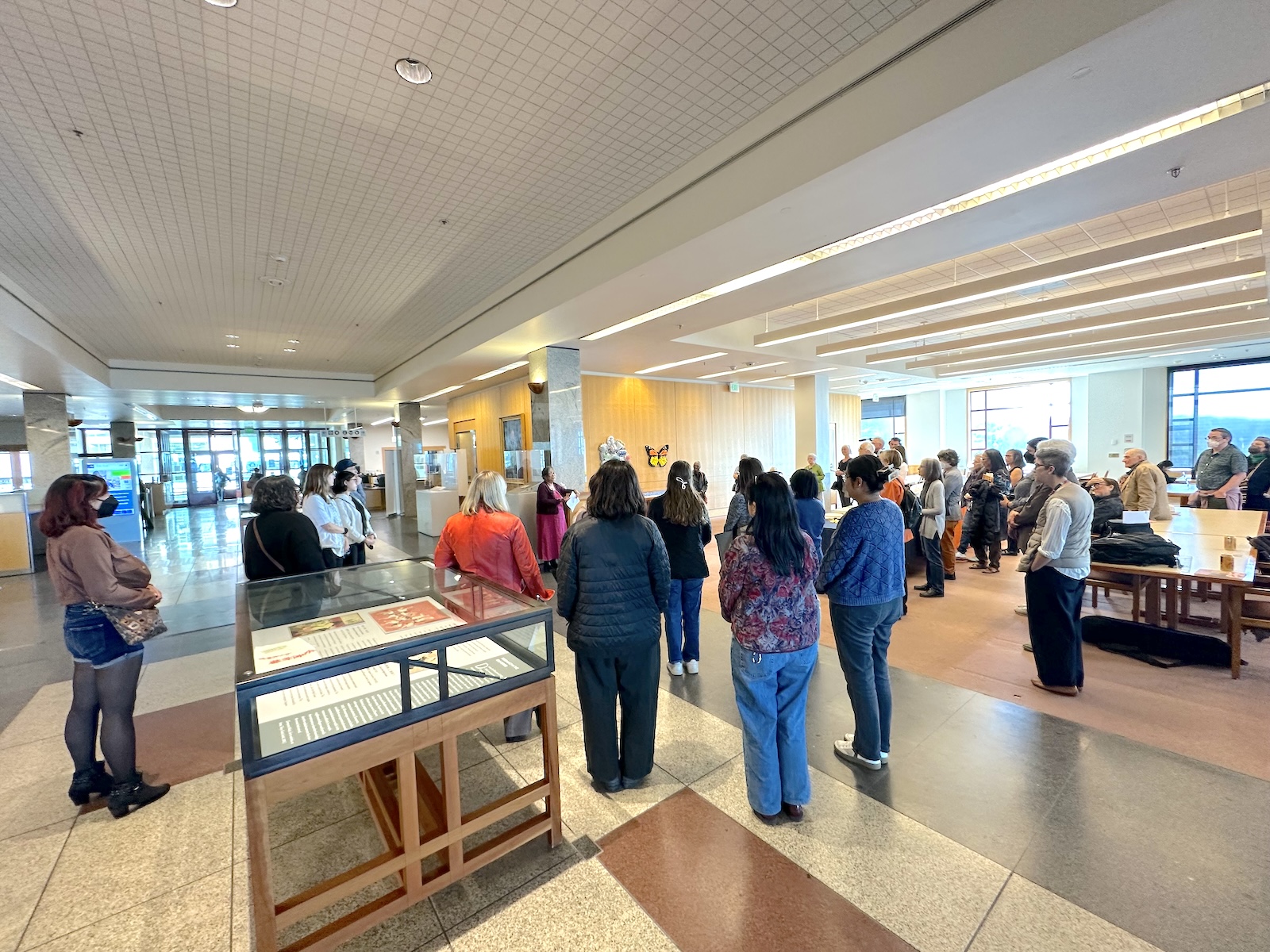
On Thursday, June 26, UC San Francisco welcomed staff, students, and the UCSF community to Kalmanovitz Library for Big Oil, Global Warming, and a Calculated Stitch, an exhibition and discussion featuring the work of UCSF’s Artist-in-Residence, Ruth Tabancay.
The exhibit, which featured art pieces crafted from materials obtained from the UCSF Medical Center, was meant to draw attention to the environmental impact of waste generated from plastic in the medical field.
“Hospitals generate vast amounts of waste, especially plastic…The works reflect the consequences of human reliance on plastic and its impact on Earth’s native populations,” read the event description.
As a UCSF Library Artist in Residence, Tabancay has been exploring connections between art and healing and uses research-based art to bridge the history of health science and contemporary issues.
“Currently, I am focused on two main bodies of work. One looks at the effects of rising ocean temperatures on the world’s coral reefs, coral bleaching. A second body of work looks at the ability of organisms to digest plastic, specifically, darkling beetle species and wax moths (Tenebrio species, Zophobas morio and Galleria mellonella) that devour polystyrene and polyethylene. An imagined extension is that other organisms such as fungi and bacteria could digest plastics as well,” Tabancay said in a story written by Library Operations Analyst Dylan Romero.
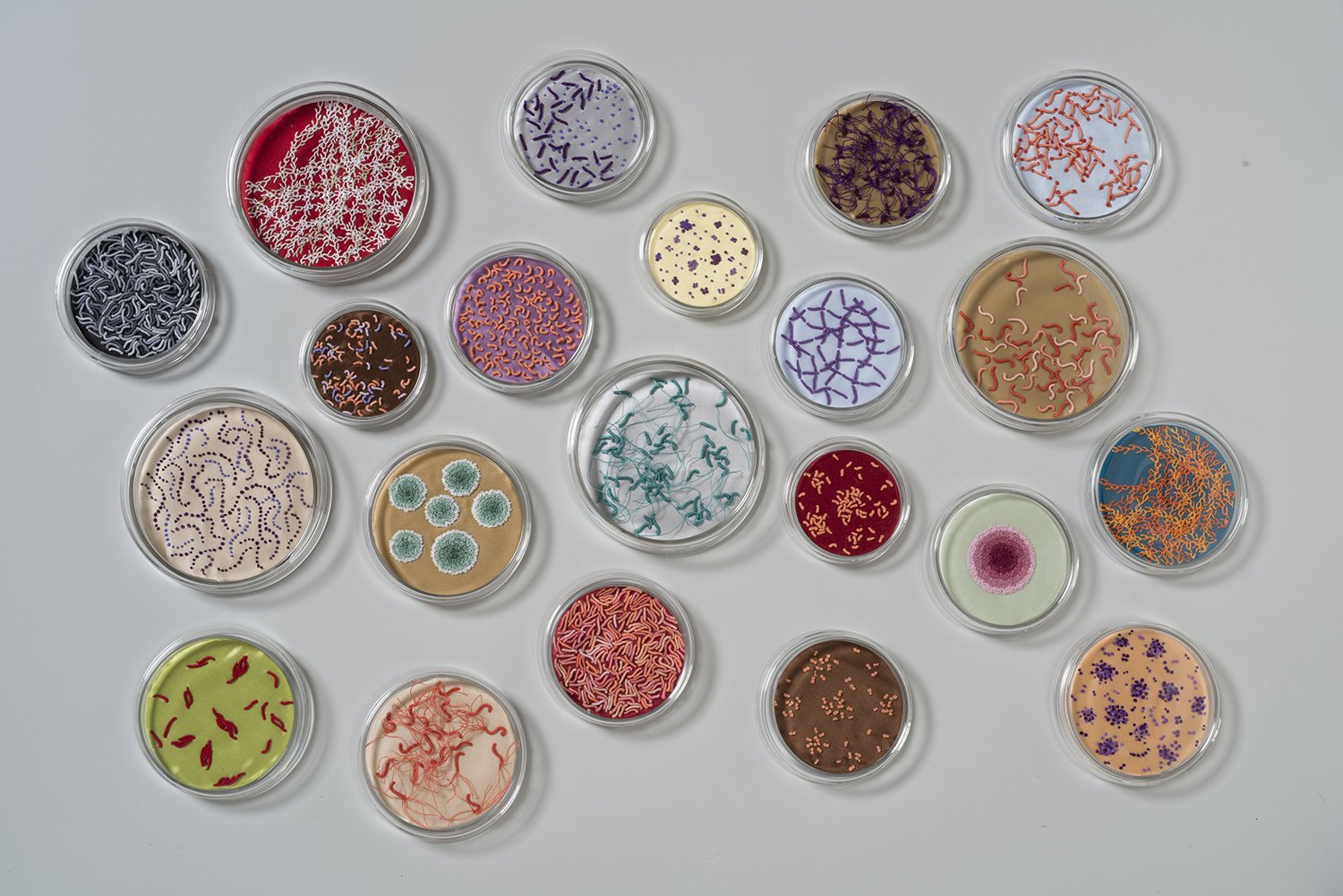 What’s In You and On You 4.0, 2022. Hand embroidery. Fabric, embroidery floss, glass Petri dishes. Courtesy of ruthtabancay.com.
A Physician by Trade, an Artist at Heart
Ruth Tabancay was born and raised in Watsonville, California, and studied bacteriology in college, and went on to attend Medical School here at UCSF. After she graduated in 1979, she completed a residency in pediatrics at the Children's Hospital Oakland (now known as UCSF Benioff Children's Hospital) before working in private practice.
However, the desire to create never left her.
“I was always trying to do some type of crafting, or teaching myself knitting, or something like that. I wanted to create my own art with my own concepts, not just copy someone else's pattern so, I made the decision to leave medicine and go to art school,” Tabancay said.
Tabancay spent nine years on her Bachelor of Arts while also raising her three children. 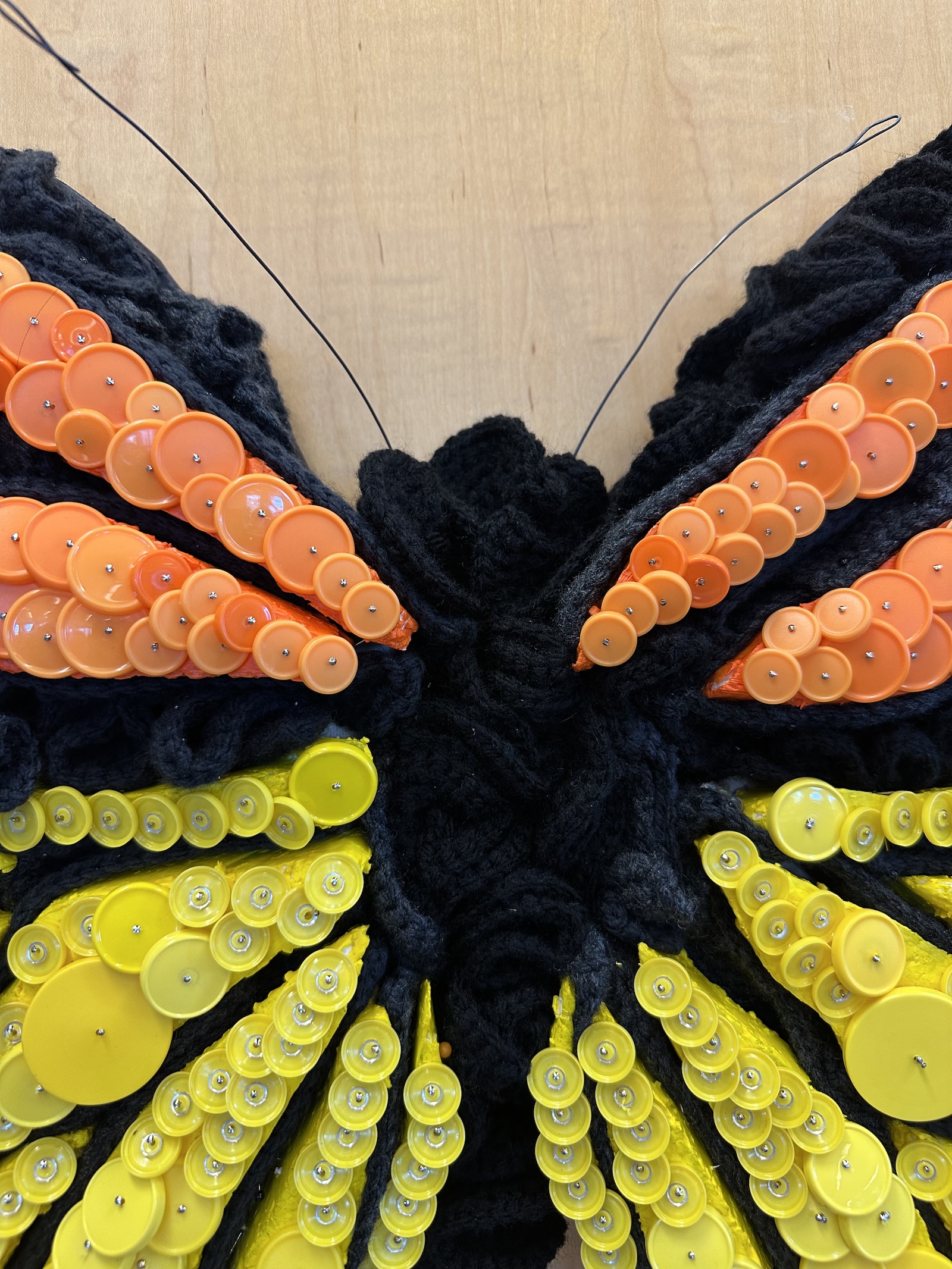
Tabancay doesn’t regret the extra time she spent on her degree but rather sees the time she took as essential to helping her hone her craft.
“It took me gave me a chance to really work on the craft making, and to think about what I'm doing, instead of trying to rush through and get all my credits,” Tabancay said.
Later, she took a course in Fiber Arts at the University of Washington in Seattle, which became a pivotal moment in her career.
"I flew back and forth 26 times during that nine-month period. But that really jump-started me thinking about what I really wanted to do with my art,” Tabancay said, “I think that going to that Seattle program was a turning point for me, because after I finished it, I never ran out of ideas again.”
Elements of her science background are evident in her work, including a series she created called What’s In You and On You, a collection of embroidered bacteria in glass Petri dishes. The idea caught Tabancay off guard: she was taking an embroidery class when she suddenly realized that particular stitches resembled bacterial rods and fungal structures.
“Years spent looking through a microscope for my education and early career have inspired me to create the microscopic world into a tangible, non-magnified one,” Tabancay said about the project on her website.
Art as Environmental Activism
A through-line of her work in recent years has been a connection to the natural world and a focus on sustainability, and in particular, plastic.
“As an artist, my most recent work concerns the relationship between fossil fuels and global warming and its adverse effects on the world’s coral reefs. I am also curious about the evolution of plastic and what can be done about the massive amounts that are accumulating on the planet.” Tabancay wrote.
For this particular exhibit, Tabancay drew inspiration from UCSF’s Health Sciences Collection and Fossil Fuel Collection of the Industry Documents Library to develop her projects.
“I was looking at documents from the seventies, eighties, and nineties oil industry, and in particular, these big companies like Exxon Mobil and Shell. There are several interesting documents where the CEO is putting out a document for stockholders that is downplaying the role of fossil fuels, trying to be a good guy…” Tabancay said, “There just seemed to be some wheeling and dealing going on that I always suspected would be happening. But now, here I'm looking at it in black and white.”
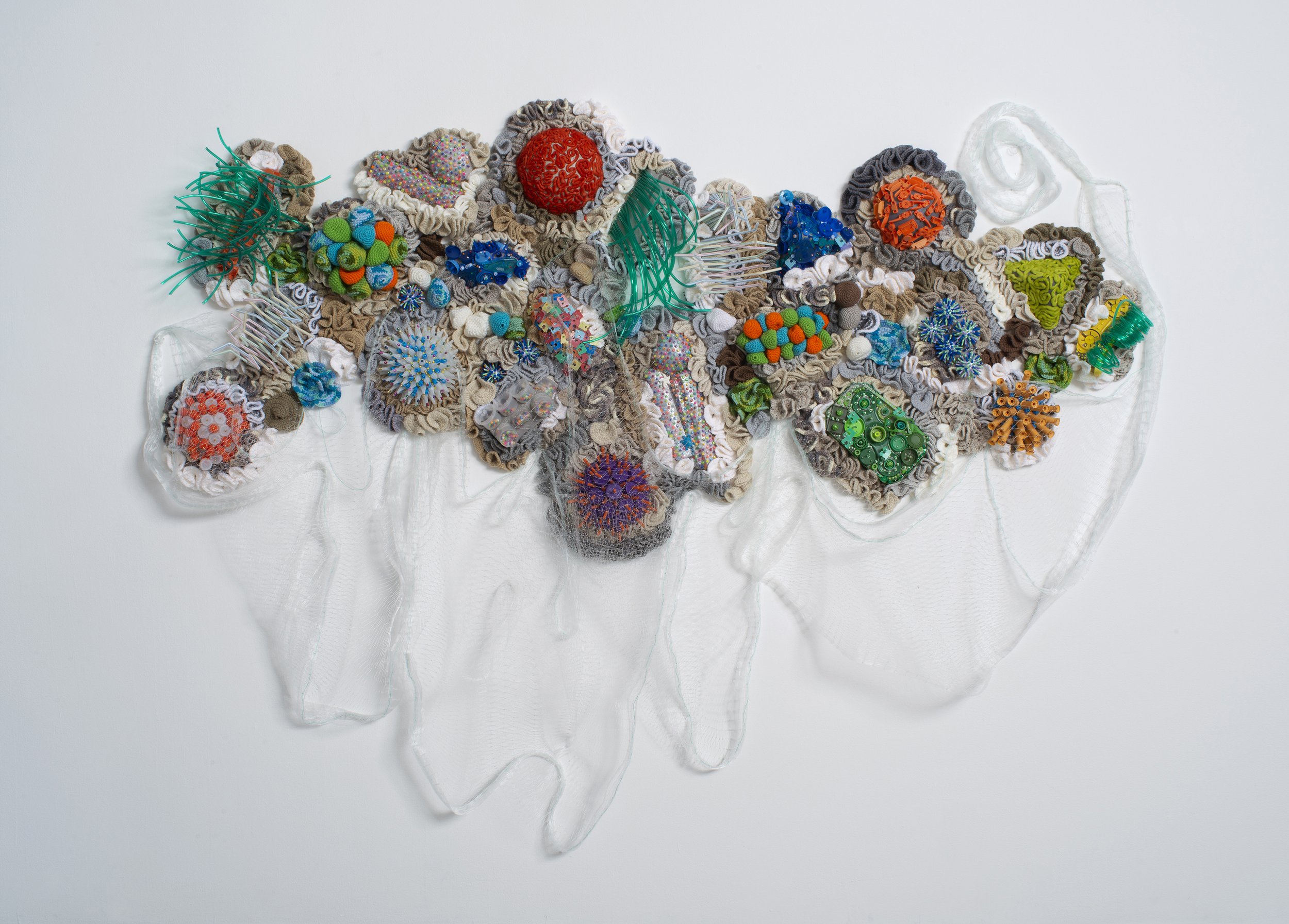 Plastic Reef, 2024. Crochet, assemblage. Yarn, plastic waste, polystyrene, canvas, pins. Courtesy of ruthtabancay.com.
The Bleaching of the Coral Reefs: Turning Disaster into Beauty
As Tabancay explained, the burning of fossil fuels increases the temperature of the ocean and affects the algae Zooxanthellae that are associated with corals and are responsible for the bright colors of coral reefs. But when those die, the corals turn white in a process referred to as ‘bleaching’ that leaves only a skeleton of the coral remaining.
“I have coral reefs that are mostly white plastic to represent the bleaching. I also have some coral reefs that are made of many colors of plastic to kind of emphasize how widespread our plastic waste is. I want people to make that connection.”
Tabancay chose her art materials and process intentionally to evoke the connection between plastics in the medical field and their environmental impact. For example, she used operating room drapes that she stitched with an surgical needle holder and suture, instead of a regular needle.
Her creations are notably beautiful, with vibrant colors and unique shapes. But this, Tabancay says, isn’t the point.
“I don't make it to be beautiful. It comes out that way, but I look at things in terms of color and shape and composition, and I make that interesting,” Tabancay paused to pull a piece of artwork from the shelf behind where she was sitting to demonstrate, “this is one of my coral reef pieces made out of these syringe covers and little pipettes from the laboratory. I didn't make that because it was going to be beautiful. I make it to give the message.”
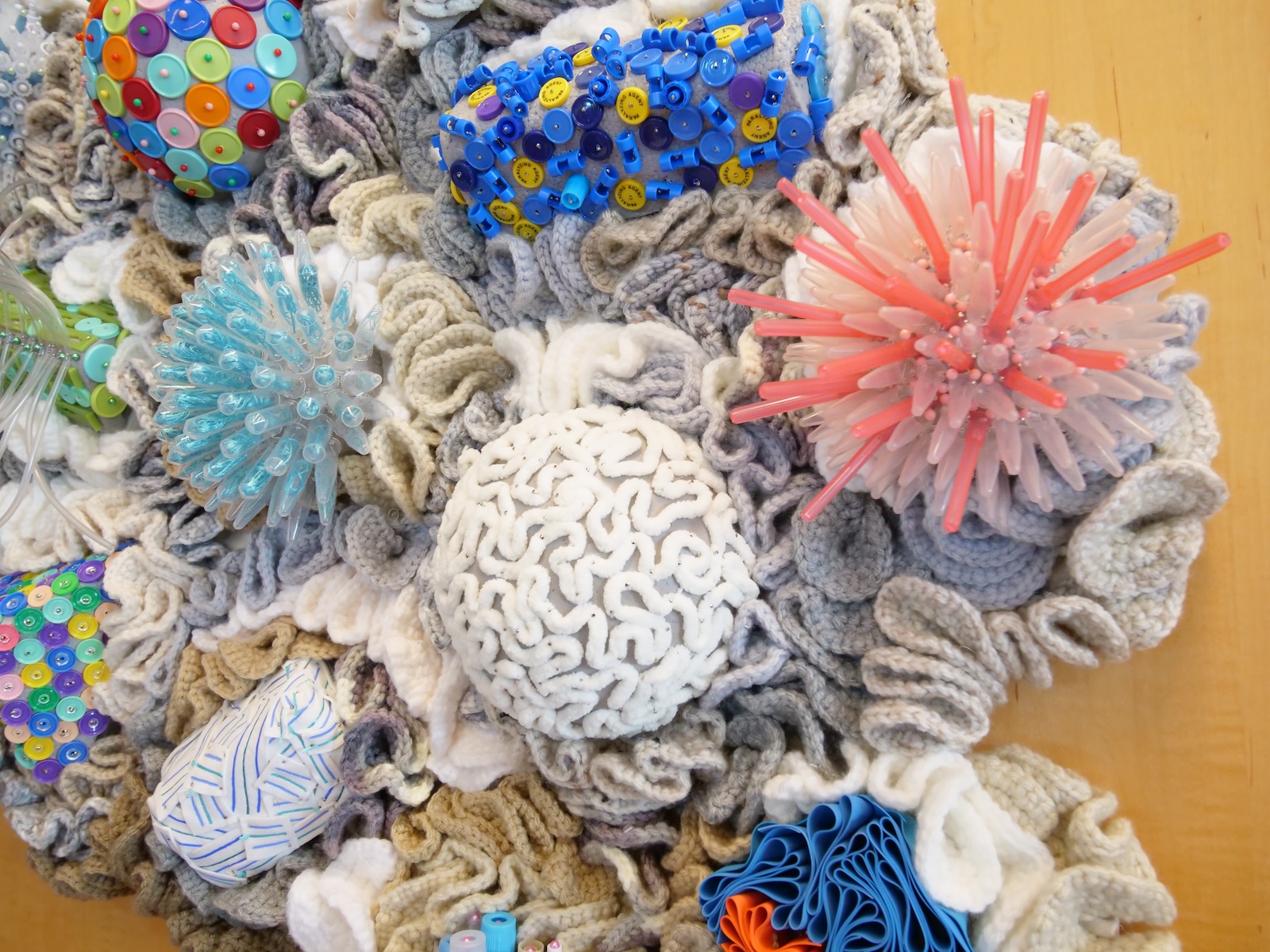 Tabancay's representation of the coral reef uses an assemblage of re-purposed materials such as pipettes from the UCSF Medical Center.
Ultimately, Tabancay hopes those who see her art learn something about the environment and can reflect on their own consumption of plastics.
“I just want people to be aware of the plastic that's used and being wasted. I also want to draw attention to bleaching of the coral reefs, and to have people think about how our human consumption is disrupting ecological systems,” Tabancay said.
UCSF Badge holders can visit the UCSF Kalmanovitz Library to see view Ruth Tabancay's artwork on display through June 2026.